Have you ever tried to sublimate a dark t-shirt and wondered why the result wasn't as vibrant as you'd hoped? The answer lies in the science: sublimation ink is transparent, so it needs a light or white base layer to show up on dark fabrics. If you've been searching for "How do you sublimate on dark shirts?" — this guide has you covered. We'll walk you through four proven methods, from HTV bases to sublimation sprays, using quality sublimation paper and the right heat press techniques.
With a handy heat press and heat transfer vinyl (HTV), you can create bold, vibrant graphics on dark shirts that last. This guide covers advanced tips, useful techniques, and trade secrets to help you master the technique.
From sublimation sprays and polymer coatings to clever shortcuts, there are proven ways to make sublimation on dark fabrics work. Combining these methods with a T-shirt press ensures smooth application and professional results.
Understanding the Basics of Sublimation on Dark Shirts
Sublimation ink is transparent — it only shows on white or light substrates, so dark shirts need a base layer like HTV or sublimation spray.
Sublimation is a process where solid dye transforms directly into a gas without turning into a liquid, bonding with fibers at the molecular level. It's primarily designed for light, polyester-based substrates because the ink itself is translucent. On dark materials, those colors get lost — but that doesn't mean it's impossible.
One common workaround is Heat Transfer Vinyl (HTV). A light or white HTV layer provides the base that sublimation ink needs to become visible. Another option is sublimation spray coatings that prepare dark fabrics to receive the ink. White toner printers also work by laying a white base layer before printing the full-color design.
Each method has its pros and cons, but all of them make it possible to create beautiful designs on dark shirts.
Materials Needed for Sublimating Dark Shirts
Investing in quality materials is essential — here's what you'll need to get professional results on dark fabrics.
Sublimation printer — A dedicated sublimation printer like the Sawgrass SG500 delivers vibrant, color-accurate prints.
Sublimation paper and ink — Choose quality brands like HTVRONT sublimation paper and Sawgrass inks for long-lasting, vivid colors.
Heat Transfer Vinyl (HTV) — Use HTVRONT HTV as a light base layer. Glitter HTV or white HTV are excellent choices.
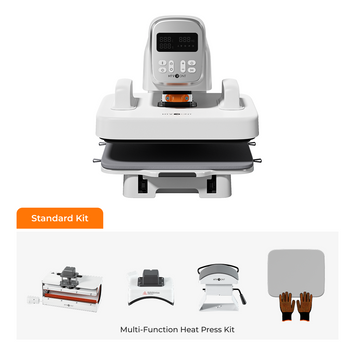
Heat press — A heat press provides even temperature and pressure, which is critical for successful transfers.
Cutting machine and weeding tools — To cut HTV to match your design.
Protective sheet — Teflon sheet or parchment paper to protect the vinyl during pressing.
Dark t-shirt — Cotton, polyester, or blends work depending on your method.
Designing Dark Shirts
Dark shirts require bold, high-contrast designs — subtle details and fine lines get lost on dark fabric, so keep it simple and impactful.
When designing for dark shirts, keep these principles in mind:
Bold colors and high contrast — The darker the fabric, the bolder your design should be. Bright, saturated colors pop best.
Vector or high-resolution artwork — Maintain sharpness and detail, especially for multi-color designs.
Simple, clear graphics — Clean shapes, logos, and bold typography work better than intricate patterns.
Now that you understand the basics and design principles, let's walk through the full step-by-step process.
Step-by-Step Guide to Sublimate on Dark Shirts
Follow these six photo-illustrated steps to create vibrant, durable designs on dark shirts using HTV as your base layer.
Step 1: Print Your Design
Start by printing your sublimation design onto sublimation paper. Use the highest quality setting on your printer, and don't be afraid to use bold, saturated colors — they'll look great on dark fabric once applied over HTV.
Step 2: Prepare the Vinyl
Place your sublimation paper on a cutting mat and trim the excess. Cut your HTV — matte, rainbow glitter, or glossy clear — to the same size as your design.
Step 3: Weed and Set Up
Weed the vinyl by removing any unwanted portions. Place the weeded HTV and your sublimation paper on the dark shirt, positioning everything before pressing.
Step 4: Apply and Stick the Vinyl
Preheat your heat press to approximately 350°F (175°C). Cover the HTV with a Teflon sheet and press for 10–15 seconds with medium pressure. Allow the vinyl to cool before moving to the next step.
Step 5: Transfer the Sublimation Design
Place the sublimation paper centered over the HTV, cover with a Teflon sheet, and press for 45–60 seconds at the temperature recommended for your specific sublimation paper and HTV combination. Firm, even pressure prevents shifting and misalignment.
Step 6: Inspect and Adjust
After pressing, peel off the sublimation paper and inspect the result. If the design appears muted on clear HTV, try glitter HTV or add a white HTV underlay for extra brightness. Make adjustments to temperature or pressure as needed for future projects.
✓ Dark Shirt Sublimation Quick Checklist
□ Print design on quality sublimation paper at high resolution
□ Cut HTV to match design dimensions
□ Weed excess HTV carefully
□ Preheat heat press to 350°F (175°C)
□ Press HTV for 10–15 seconds with medium pressure
□ Let HTV cool completely
□ Position sublimation paper over HTV and press 45–60 seconds
□ Peel paper while warm and inspect
□ Wash inside-out in cold water after 24 hours
Heat Press and Temperature Settings
Getting the temperature, pressure, and time right is the single most important factor for successful dark shirt sublimation.
Temperature and time depend on the type of HTV and sublimation materials you're using. For most HTV, set your press to 320–350°F (160–175°C) for 10–15 seconds with medium pressure. The sublimation transfer itself typically requires 385–400°F (195–204°C) for 45–60 seconds.
Always consult the manufacturer's guidelines for your specific HTV and sublimation paper. Refer to the sublimation temperature guide for a comprehensive breakdown of recommended settings for different materials and substrates.
Addressing Common Problems
These four issues are the most common when sublimating dark shirts — here's how to identify and fix each one.
1. Prints That Fade
Problem: Colors appear washed out or fade quickly after washing. Cause: Incorrect temperature, pressure, or time — or using low-quality sublimation paper. Solution: Use the recommended settings for your heat press and HTV. Invest in quality sublimation paper and ink for better color retention.
2. Ghosting
Problem: A blurry shadow appears next to the main design. Cause: The sublimation paper shifted during pressing. Solution: Secure the paper with heat-resistant tape before pressing to prevent movement.
3. Blurry Prints
Problem: Design lacks sharpness or appears smudged. Cause: Low-resolution source images or excessive heat during pressing. Solution: Always use high-resolution artwork (300 DPI minimum) and verify your heat press settings match the material specs.
4. Banding (Horizontal Lines)
Problem: Visible horizontal lines or streaking across the print. Cause: Clogged printer nozzles or incorrect print settings. Solution: Run a nozzle check and clean the printheads. Verify print quality and paper settings are correct.
Frequently Asked Questions
Quick answers to the most common questions about sublimating dark shirts.
Can sublimation be directly done on dark shirts?
No. Sublimation ink is transparent and won't show on dark fabrics without a base layer. Use HTV, sublimation spray, or a white toner printer to create the base that allows colors to appear.
What materials do I need to sublimate on dark shirts?
You'll need a sublimation printer, quality sublimation paper and ink, heat transfer vinyl (HTV), a heat press, cutting machine, weeding tools, and a dark t-shirt. Glitter HTV or white HTV works best for the base layer.
What temperature and time should I use to heat press HTV?
For most HTV, press at 320–350°F (160–175°C) for 10–15 seconds with medium pressure. The sublimation transfer then requires 385–400°F (195–204°C) for 45–60 seconds. Always check the manufacturer's instructions for your specific materials.
How do I prevent design fading or peeling on dark shirts?
Use high-quality sublimation paper and ink, follow the correct heat press settings, and allow the shirt to cure for at least 24 hours before washing. Wash inside-out in cold water, avoid bleach, and never iron directly on the design.
Can a regular inkjet printer be used for sublimation?
No. Sublimation requires a dedicated sublimation printer with compatible sublimation inks. Regular inkjet printers use standard inks that won't sublimate and can damage the printer if used with sublimation supplies.
What should I do if I experience alignment issues during sublimation?
Use heat-resistant tape to secure the design before pressing, print a test copy first, and use alignment tools like rulers or laser guides. A cutting machine also helps ensure precise HTV placement.
Now you know how to sublimate on dark shirts — a process that opens up exciting creative possibilities. The key is choosing the right base layer, using quality materials, and following proper heat press settings. With practice, you'll create bold, durable designs that look professional and stand the test of time.
Want a full breakdown of recommended heat, pressure, and time for every substrate? Our sublimation temperature guide covers it all — so you can press with confidence every single time.


 Cart Unlocks Add-On Deals