[Business Guides] How to Start a Heat Press T-Shirt Business in 2026
Written by Michael Franco
|
Published on
|
Modified on
|
Reading time for 11 min
Table of Contents
If you've ever dreamed of turning your creativity into a money‑making venture, 2025–2026 is the perfect window to start your custom T‑shirt business. According to Statista, the global custom apparel market is projected to grow at a CAGR of 9.4% through 2027, driven by consumer demand for unique, self‑expressive fashion. Meanwhile, IBISWorld estimates the U.S. T‑shirt printing industry alone is worth over $4 billion — and the entry barrier has never been lower.
Whether you're a crafter looking to scale up or an entrepreneur searching for a profitable side hustle, this guide will walk you through how to start a T‑shirt printing business from home — from choosing the right heat press to pricing your products and leveraging 2026's hottest social platforms for local growth.
Why Start a Custom T‑Shirt Business in 2025–2026?
The custom apparel market is booming, with record demand, affordable technology, and flexible business models converging to create the perfect launch moment.
A Grand View Research report notes that the growing preference for personalized products — especially among Gen Z and millennials — has made custom T‑shirts a $3.6 billion global market. Combine that with the accessibility of heat press machines and vinyl cutters, and you have a recipe for a low‑risk, high‑reward business.
Booming Demand for Personalized Apparel
People love unique, one‑of‑a‑kind designs that reflect their personality, passions, or causes. From funny slogans to niche hobbies (dog lovers, sports fans, pop culture), the market is exploding. 77% of consumers are more likely to buy from a brand that offers personalization, according to a McKinsey study. Businesses also need branded apparel — creating a steady stream of bulk orders.
Low Startup Costs & High ROI
Unlike screen printing — which can cost $800–$2,000 per color setup — heat transfer printing requires a one‑time equipment investment starting at around $500. With material costs averaging $3–$8 per shirt (blanks + HTV) and retail prices ranging from $25–$45, gross margins can exceed 60–70% on single orders. According to Printful, the average profit per T‑shirt sold via Etsy is $12–$18 after fees.
Flexibility — A Home‑Based Setup
You don't need a storefront or a large workshop. A spare bedroom, garage, or even a kitchen counter can serve as your production space. Shopify reports that 62% of new e‑commerce businesses start from home — and custom apparel is one of the most popular categories.
Easy‑to‑Learn Technology
Free tutorials from HTVRONT — available on YouTube and TikTok — cover everything from HTV and sublimation to DTF printing. No expensive courses required.
Eco‑Friendly On‑Demand Production
Unlike fast fashion, a custom T‑shirt business produces items only when ordered — reducing waste. A Ellen MacArthur Foundation report highlights that on‑demand production can cut textile waste by up to 30%. HTVRONT's DTF printers enable low‑waste, high‑quality printing, appealing to the growing segment of eco‑conscious consumers.
Essential T‑Shirt Printing Equipment for Beginners
Starting your business requires the right tools. HTVRONT offers affordable, beginner‑friendly equipment — but any brand that meets the specs below will work.
Affordable Heat Press Options — What to Look For
When choosing a heat press, prioritize three things: even heat distribution (±5°F tolerance), adjustable pressure, and a platen size that matches your typical design (10" x 10" is the sweet spot for T‑shirts). Here are three popular options that meet these criteria:
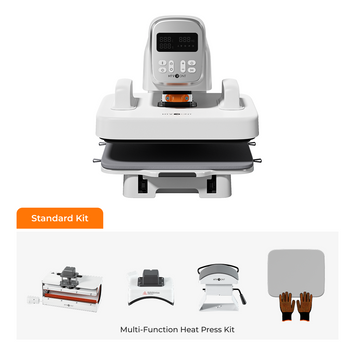
Entry‑Level: HTVRONT T‑Shirt Heat Press 10" x 10"
Compact, affordable, and perfect for home‑based businesses with limited space. Delivers even heat and pressure for quality results.
Once you've outgrown basic HTV and want to offer full‑color, photo‑quality prints on any fabric — including dark cotton — Direct‑to‑Film (DTF) printing is the natural next step. HTVRONT's 2026 releases make this transition smoother than ever.
HTVRONT D2 DTF Printer — Built for Growing Businesses
The HTVRONT D2 DTF Printer is a second‑generation machine designed specifically for creators who want to scale production without drowning in maintenance. Powered by an XP600 printhead with 1,080 nozzles and CMYK + white 6‑channel printing, it delivers 720 × 1440 DPI resolution for vibrant, detailed images. Print speeds reach up to 16 ft² per hour with a 13‑inch (A3) print width — enough capacity to handle both daily orders and higher‑volume runs.
What truly sets the D2 apart is its "worry‑free" maintenance system. DTF printers are notorious for white ink clogging, but the D2 features automated white ink circulation, printhead cleaning, and multi‑layer filtration to reduce sediment buildup. A Sleep‑care Mode keeps the printer self‑maintaining even when idle — no constant PC connection required. Built‑in ink shortage and leakage alerts (with visual and sound signals) help you catch issues early and avoid wasted materials.
On the software side, the D2 runs on HTVRONT IdeaStudio — an all‑in‑one platform that integrates RIP and image processing into a single workflow. Features like auto layout, Smart Nesting for gang sheet optimization, and broad format support reduce the learning curve and material waste. Setup is quick and straightforward — no dongle needed.
HTVRONT DO1 DTF Oven — Faster, More Consistent Curing
DTF printing requires three steps: printing, powdering, and curing. The HTVRONT DO1 DTF Oven — launched in August 2026 — is designed to make the curing stage faster and more consistent. Its dual‑layer heating system delivers heat from both the top and bottom, improving curing efficiency by 30% and ensuring even powder melting across the entire design.
The DO1 offers a generous 19 × 17 inch (48.3 × 43.2 cm) curing area — large enough to cure multiple transfers at once or accommodate bigger gang sheets. A built‑in air filtration system eliminates the need for a separate external purifier, with a replaceable filter cartridge and helpful replacement reminder. The oven also supports an external exhaust pipe for flexible workspace setup.
Paired with the D2 printer, the DO1 creates a complete, efficient DTF workflow — from printing and powder curing to the finished transfer.
💡 Looking ahead: HTVRONT is expanding beyond heat transfer. Keep an eye out for the E15 embroidery machine — a 15‑needle model expected to launch in September 2026, opening up a whole new category of custom apparel decoration.
Cutting & Printing Equipment
Precision cutting is essential for clean edges and professional finishes.
HTVRONT iCraft Cutting Machine
Handles intricate designs, lettering, and logos with ease. Compatible with most HTV brands.
Create stunning graphics with templates, fonts, and design elements — no expensive software required.
Choosing the Right Supplies for Heat Transfer Printing
Your choice of materials — HTV, sublimation paper, or DTF film — determines the quality, durability, and look of your finished products.
HTV vs. DTF vs. Sublimation — Which One to Use?
Here's a quick breakdown to help you decide based on your target products and order volume.
Feature
HTV (Heat Transfer Vinyl)
DTF (Direct‑to‑Film)
Sublimation
Best for
Simple designs, text, logos
Full‑color, photo‑quality, intricate
All‑over prints, gradients, photos
Fabric compatibility
Cotton, polyester, blends
All fabrics
Light‑colored polyester only
Order volume fit
1–50 pieces
10–500+ pieces
1–100+ pieces
Equipment cost
$500–$1,000
$1,500–$3,500+ (printer + oven)
$800–$2,500 (with printer)
Learning curve
Low
Medium
Medium
HTVRONT Heat Transfer Vinyl (HTV)
Beginner‑favorite. Cut with a vinyl cutter, weed, and press. Ideal for small‑to‑medium orders on cotton and blends. Durable — won't crack after repeated washes.
HTVRONT Sublimation Paper
Perfect for full‑color, permanent prints on polyester. Ink bonds with fabric fibers — no peeling.
DTF — All fabrics, dark colors, complex designs, requires a DTF printer + oven.
Tip: Many successful businesses offer all three. Start with HTV and add DTF or sublimation as you scale.
Free Design Resources to Get Started
HTVRONT's Free SVG Library offers hundreds of ready‑to‑use designs — quotes, seasonal graphics, and more. HTVRONT WorkShop provides customizable templates for tailoring themes to specific events or niches.
Step‑by‑Step Heat Transfer Printing Guide
Design, cut, weed, and press — here's how to make your first custom T‑shirt using HTV.
Step 1: Design Your T‑Shirt
Open HTVRONT IdeaStudio and start creating. Use the HTVRONT SVG Library if you want a head start. Keep designs bold and simple for easier weeding.
Step 2: Cut & Weed
Load HTV onto the cutting mat — shiny side down. Set your cutter to the correct material setting and mirror the image. Once cut, use a weeding tool to remove excess vinyl.
Step 3: Heat Press
Preheat your heat press to 300°F (148°C) for most HTV. Pre‑press the T‑shirt for 5 seconds to remove moisture. Position your design, cover with a protective sheet, and press for 10–15 seconds with even pressure. Follow the correct peel method — hot peel immediately, cold peel after cooling.
Common Mistakes to Avoid
Skipping the pre‑press — moisture causes poor adhesion.
Wrong pressure — too little = weak transfer, too much = squished design.
Mixing up peel methods — hot peel immediately, cold peel after cooling.
Forgetting to mirror — text will appear backwards!
✓ T‑Shirt Printing Quick Checklist
□ Choose the right method (HTV, sublimation, or DTF)
□ Mirror your design before cutting
□ Pre‑press your fabric to remove moisture
□ Use the correct temperature and time settings
□ Apply even pressure during pressing
□ Follow the correct peel method (hot or cold)
□ Price your products 2–3× your total cost
Cost Analysis & Profit Model — What to Expect
Startup costs vary by setup. Here's a realistic breakdown including equipment, materials, and a realistic profit projection.
Professional auto press + D2 DTF Printer + DO1 Oven + full inventory
$4,000+
~150–200 shirts
Realistic profit example: A shirt sells for $30. Material costs (blank + HTV + packaging) = $7–$9. Platform fees (Etsy/Shopify) = ~$4–$6. Net profit = $15–$19 per shirt. At 50 shirts per month, that's $750–$950/month in side income — with room to scale.
⚠️ Reality check: Expect a 5–10% material waste rate during your first month due to mis‑presses, weeding errors, and test prints. Factor this into your pricing.
2026 Growth Strategies — How to Turn Craft Into Cash
Once you've mastered production, use these tactics to attract customers — especially through local social media exposure.
TikTok & Lemon8 — Hyper‑Local Visibility for 2026
In 2026, TikTok and the fast‑growing visual discovery app Lemon8 have become essential for crafters and small business owners. While TikTok drives viral short‑form engagement, Lemon8 acts as a Pinterest‑style visual search engine — perfect for showcasing your design process, material close‑ups, and finished pieces in a lifestyle context.
How to get local orders through social media:
Always add your city/region in the location tag — this puts your content in front of nearby users.
Use hyper‑local hashtags — e.g., #CustomTshirtsAustin, #NYCCrafts, #LondonMakers.
Post short time‑lapse videos — 15‑second press processes, "day in the life" stories, and design reveals perform best.
Aim for 3–4 posts per week across both platforms — consistency builds algorithmic favor.
According to Social Media Today, local businesses using geo‑tagged content on TikTok see a 30–40% higher engagement rate and significantly better conversion to in‑person or local delivery orders.
Sell on Etsy, Shopify, and Instagram Shops
Etsy is a natural fit for custom products. Shopify lets you build a branded storefront. Instagram Shops enable direct in‑app purchases. Use SEO‑friendly keywords like "custom T‑shirts" and "personalized apparel" in your product descriptions.
Find Support & Network
Join the HTVRONT Discord community for tips, troubleshooting, and networking. Connecting with other crafters helps you stay motivated and learn new techniques.
Frequently Asked Questions
Quick answers to the most common questions about starting a T‑shirt business with heat transfer printing.
What's the difference between HTV and sublimation printing?
HTV is a cut‑and‑press method that works on cotton and blends — ideal for simple designs. Sublimation uses heat to bond ink with polyester fibers, creating vibrant, permanent prints that won't peel. Sublimation works only on polyester or coated surfaces.
Do I need a cutting machine for heat transfer printing?
Not always — you can use printable HTV with a standard inkjet printer for simple designs. However, a cutting machine like the HTVRONT iCraft gives you precision and the ability to create intricate shapes and logos.
Where can I get free designs for my T‑shirt business?
HTVRONT offers a free SVG library with hundreds of ready‑to‑use designs. HTVRONT WorkShop provides customizable templates. Canva, Creative Fabrica, and other platforms also offer free resources for commercial use.
How much does it cost to start a T‑shirt business with a heat press?
A basic starter kit costs around $500–$1,000. Intermediate setups with a DTF printer + oven range from $1,500–$3,500, and advanced professional setups start at $4,000+.
Can I use a household iron instead of a heat press?
Household irons don't provide consistent temperature or pressure. A proper heat press ensures even heat distribution and professional results — highly recommended for any serious business.
What's the #1 mistake beginners make that costs them money?
Under‑pricing their products. Many beginners forget to factor in material waste (5–10%), shipping, packaging, and platform fees. A safe rule: charge 2.5–3× your total material cost to ensure sustainable profit.
Final Thoughts
Starting a custom T‑shirt business in 2025–2026 is one of the most accessible small‑business opportunities available. With affordable entry‑level equipment from HTVRONT, the new D2 DTF Printer + DO1 Oven for scaling up, and powerful social platforms like TikTok and Lemon8 for local visibility, you have everything you need to turn creativity into income.
Start small, learn from mistakes, and scale as you grow. Explore HTVRONT's product ranges, follow the free tutorials, and join the community. Your first custom T‑shirt — and your first customer — is just a few presses away.
📌 Coming soon: HTVRONT is expanding into embroidery with the E15 15‑needle embroidery machine, expected in September 2026 — a whole new way to customize apparel and accessories.
Master your heat press settings with our complete guide — covering temperature, time, and pressure for every material.


 Cart Unlocks Add-On Deals