Recent developments in printing methods continue to expand the sphere of garment customization. One method that has gained popularity in recent years because of its versatility is DTF printing. You might have heard of it before, and here I will tell you why its use is booming.
Direct Film (DTF) printing is a process where designs are printed onto a polyester film using a specialized printer, then transferred to fabric using adhesive powder and a heat press machine.
DTF printing quickly caught on because it allows the liberty to work on different surfaces and several fabric types while still producing vibrant and lasting prints. It works well on cotton and cotton blends, polyester, fleece, and nylon, regardless of color.
This cutting-edge technology can be a game changer for your garment customization business or hobby. Let's explore how it works in detail. For a broader understanding of how DTF compares to other techniques, check out Heat Press DIY for Beginners: Understand HTV, DTF, and Sublimation.
1. DTF Printing Principles and Process
1.1 DTF Printing Procedure
Here is a detailed step-by-step process for implementing DTF printing.
Preparation of the Design and Printer: Once you have settled on the design, import it to the image processing software. Then, calibrate the required cartridges to set up the DTF printer. Cut out the PET film and load it onto the DTF printer.
Print the Design: Print the entire design in color. The printer creates the first layer, and then the machine prints the white layer on the whole image, completely covering the first layer. Carefully remove the film and lay it on a flat surface.
Adhesive Powder Application and Curing: Apply the powder uniformly on the wet ink until complete coverage. Remove the excess powder. Cure the adhesive by heating the film in a curing oven or with a heat press machine. For a detailed walkthrough, see the DO1 DTF Oven tutorial.
Heat Press the Design: Pre-press the fabric using a heat press for 2–5 seconds. This process dehumidifies and flattens the garment. Place the printed film on the fabric, then heat press it for 15–20 seconds at temperatures of 165°C to transfer the image. Peel the film from the garment and flatten the design by heat pressing it a second time.
1.2 DTF Printing Equipment
Software for DTF Printer
DTF printing requires specialized raster image processing software (RIP) to handle CMYK and white colors. RIP converts vector designs to bitmaps optimized for printing. The software impacts the color performance, ink print features, and final print.
DTF Printer
The printing requires a specialized or modified inkjet printer with textile inks specific to DTF printing. Multiple colored ink tanks allow the printer to work conveniently with CMYK settings. Learn more about what a DTF printer is and how it works.
DTF Printer Ink
The DTF printer inks are unique water-based and solvent-based pigments designed in Cyan, Yellow, Magenta, White, and Black. Water-based inks are more environmentally friendly, but solvent-based ones are more durable. Discover more about what DTF ink is and its key properties.
DTF Printer Films
The DTF printer uses PET films, which are different from the ones used for screen printing. The PET films are 0.75 mm thick, which gives them better transfer characteristics. They are classified according to:
Release mechanism: Cold peel type and hot peel type.
Visual effects: Reflective film, laser film, luminous film, shining film, gold/silver film, glossy transfer film, and color base film.
Coating process: Single-coated and double-coated films.
Hot-Melt Adhesive Powder
DTF printing powder is a white granular powder used for adhesive purposes. It is made from a mixture of polyester and polyurethane resin, color, and other additives. The powder helps to bind the colored pigments in the printout to the garment surface.
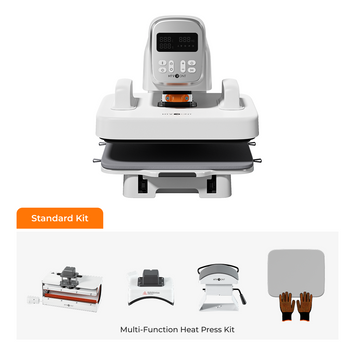
This equipment helps to transfer the images onto a fabric surface. It can also melt powder on your DTF film.
2. Advantages and Disadvantages of DTF Printing
Here are the key pros and cons of DTF printing to help you decide if it's the right method for your projects.
Advantages
Low initial investment. DTF printing is more affordable to set up compared to other commercial printing methods.
High-resolution prints. With a proper selection of good-quality ink, printer, and fabric, it produces vibrant colors and finer details.
Versatile fabric compatibility. It can work on several fabrics, such as cotton and cotton blends, polyester, fleece, and nylon.
Elastic prints. With good ink, DTF printing provides prints that won't crack when stretching the fabric.
Wash and wear resistance. It provides good durability, especially when good-quality ink, fabric, and curing processes are used.
No pre-treatment required. Unlike some other methods, DTF does not require any pre-treatment of the fabric.
Disadvantages
Delicate process: DTF printing is a delicate process and requires one to use quality printers, ink, and consumable materials to eliminate deviations in the quality of the output. For maintenance tips, see how to deep clean the D2 DTF Printer.
3. Comparison with Other Printing Methods
This table compares DTF printing with DTG, screen printing, and white toner printing across key factors.
Item
DTF Printing
DTG Printing
Screen Printing
White Toner Printing
Color Performance
Depends on ink set, printer, and application.
Depends on ink set, printer, and application.
Better and more consistent
Depends on ink set, printer, and application.
Set-up Costs
Cheaper to set up
Expensive to set up
Expensive
Inexpensive
Running Costs
Depends on print volume, ink prices, and film costs.
Depends on print volume, ink prices, and film costs.
Cheaper for larger batches.
Depends on print volume, ink prices.
Suitable Fabrics
Cotton, cotton blends, polyester, fleece, nylon.
Cotton and cotton blends.
Cotton and cotton blends.
Cotton, polyester, cotton and polyester blends, hats, backpacks.
Environmental Impact
Uses eco-solvent inks; requires proper disposal of heat transfer film.
Uses eco-solvent inks that are energy-efficient.
Uses water in screen cleaning and stencil preparation.
Uses fewer chemicals; toner cartridges are recyclable.
4. Application Areas of DTF Printing
DTF printing is used across a wide range of industries and products.
Garment Customization
DTF printing allows designers and clothing brands to deliver personalized and captivating designs on a wide range of clothing. Common examples include T-shirts, hoodies, jackets, hats, and aprons.
Promotional Products
DTF printing delivers brand logos and messages on promotional merchandise such as umbrellas, hats, tote bags, and accessories. These are good marketing tools that promote brand visibility.
Sportswear and Team Uniforms
It is used to craft personalized uniforms and sportswear for amateur leagues and professional teams. It provides durability and clarity for displaying team logos, player names, and numbers.
Product Labels and Packaging
This type of printing is also used to label packaging materials. Businesses looking for a practical way to brand their packaging will find that DTF printing provides visually captivating on-point presentations.
Interiors and Decor
Printing extends beyond interior design. It is also used to customize décor that matches specific color schemes. The designs can be on canvas, photographic frames, or napkins, among other items.
DTF Printing is the Best Method for You If:
You have a low starting investment and want a printing method that will be up and running quickly.
You want to personalize T-shirts and other textile products such as masks, bags, cushion covers, and sweatshirts.
You are dealing with cotton or polyester fabrics and their blends in any color.
You want to deliver premium and quality printing.
You are dealing with both dark and light fabric.
✓ DTF Printing Quick Checklist
□ Use quality DTF printer and consumables for consistent results.
□ Ensure proper RIP software setup for accurate color reproduction.
□ Apply adhesive powder evenly and cure thoroughly.
□ Pre-press fabric to remove moisture and wrinkles.
□ Follow recommended temperature (165°C) and time (15–20s) settings.
□ Perform a second press after peeling for a flat finish.
□ Regular maintenance of your DTF printer prevents clogging.
Frequently Asked Questions
Quick answers to the most common questions about DTF printing.
What is the difference between DTF and sublimation printing?
DTF works on both light and dark fabrics, including 100% cotton, while sublimation only works on light-colored polyester fabrics. DTF also has a softer hand feel compared to sublimation's dye-infused finish. Learn more about the differences between DTF printing and sublimation.
Is DTF printing expensive to start?
DTF printing has a relatively low initial investment compared to screen printing. A basic DTF setup costs significantly less than a commercial screen printing operation, making it accessible for small businesses and hobbyists. For cost details, see how to start a small DTF printing business at home.
Can I use DTF on 100% cotton?
Yes! One of the biggest advantages of DTF is its versatility. It works exceptionally well on 100% cotton, as well as polyester, blends, and even non-fabric surfaces like metal and wood.
Do I need a special printer for DTF printing?
Yes, DTF printing requires a specialized printer with pigment inks (CMYK plus white) that can print onto PET films. A D2 DTF Printer tutorial covers everything from software download to DTF printing.
How long does a DTF transfer last?
With proper application and care, DTF prints can last 50-100 washes without cracking or fading. Durability depends on the quality of ink, powder, and correct curing processes.
Conclusion
DTF printing is versatile and works on a wide range of fabrics to produce high-quality, vibrant, and durable designs. It compares favorably to other printing methods and has the advantages of lower investment costs and good wash and wear resistance, especially when working with good-quality ink. It is a great option for small and medium-sized businesses looking to take their garment customization to the next level.
DTF printing is in its youthful stage, with expectations of notable advancements soon. Printer manufacturers are looking to expand the printers' capacity to accommodate faster printing speeds and larger and more surfaces. They are also working on more eco-friendly powders and disposal methods for DTF films to address environmental concerns.
The prospects of AI in digital printing also offer the hope for better design software, print accuracy, and optimized printing workflow.


 Cart Unlocks Add-On Deals