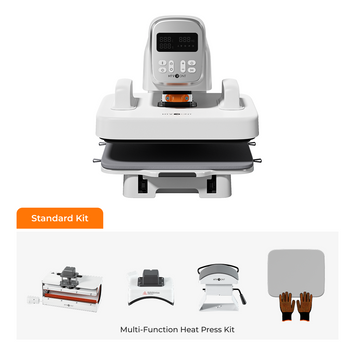
Transforming your wardrobe doesn't always mean buying new clothes. Sometimes, it's about reinventing what you already have. With bleaching agents, you can turn a vibrant pink shirt into a pristine white tee — and then leave it as is, or use the new blank canvas to create fresh art with a T-shirt press or fabric paint.
Simple enough, right? Well, yes and no: bleaching is a straightforward way to remove color from clothes, but as with any chemical reaction, there are by-products and potential adverse reactions when done poorly. If you've been searching for "How do you bleach colored clothes to white?" — this guide walks you through everything you need to know to do it safely and effectively.
Also, not all fabrics respond to bleaching in the same way — some embrace the transformation while others resist or get damaged. Read on to master bleaching as part of your DIY transformation toolkit.
What Is Bleaching?
Bleaching is a chemical process that removes color by breaking down dye molecules — either through oxidation or reduction.
Bleaching means removing color by breaking the chemical bonds of your fabric's dye molecules. There are two main chemical processes by which bleaches work: oxidation and reduction.
In oxidation, the bleaching agent removes electrons from dye molecules. This breakdown is aggressive and strips away color — but it can also damage surrounding fabric if not used carefully. Common oxidative bleaches include sodium hypochlorite (household bleach), oxygen bleaches (like Oxiclean), and hydrogen peroxide.
In reduction, the bleach adds electrons to dye molecules. This removes color more gently and is less likely to damage fabric, but it's not as strong or effective. Examples include sodium dithionite and sodium hydrosulfite — the active ingredient in Rit Color Remover, available at most craft stores.
Which Type of Bleach Is Best to Bleach Colored Clothes to White?
Oxidative bleaches like household bleach are the most effective for whitening colored clothes — but proper dilution and careful handling are essential.
Oxidative bleaches are the most effective at bleaching colored clothes to white at home, but they come with risks. The first time I bleached a shirt, it turned a horrifying yellowish tone, and holes soon followed — that's the power of oxidative bleaches when used carelessly. Reductive bleaches are gentler but can't remove some dyes, especially synthetic ones.
A possible approach is to combine both methods — start with a reducing bleach, then follow with an oxidizing bleach if color remains. However, this makes the process excessively long. Instead, a more effective approach is to use an oxidizing bleach while mitigating the factors that cause damage.
You can make oxidizing bleaches safer in these ways:
Proper dilution — Never use undiluted bleach. It can turn your garments into Swiss cheese. We'll cover proper dilution in the step-by-step section below.
Limit fabric exposure — Don't leave bleach on fabric for extended periods. Keep each bleaching round under 7 minutes.
Use a bleach-neutralizer afterward — Stop the bleaching action with neutralizing agents like hydrogen peroxide or vinegar.
Be careful with fabric type — Some fabrics react badly to even diluted bleach. Avoid silk and wool.
Despite being quite reactive, sodium hypochlorite (household bleach) is the best bleach for whitening colored clothes at home.
Pros and Cons of Bleach Types
Method
Pros
Cons
Verdict
Oxidizing Bleach
Readily available and cheap; fast and effective; simple process
Can damage fibers leading to holes; can cause yellowing; highly corrosive if mishandled
Best option for whitening colored clothes when used properly; best for few dye layers
Reducing Bleach
Gentler on fabrics
More expensive; takes longer; may need multiple treatments; less effective on synthetics
Best for delicate fabrics
Can I Bleach My Colored Clothes to White?
Whether you can bleach colored clothes to white depends on four key factors: dye type, dyeing method, fabric type, and the garment's underlying base color.
Here are the factors that determine your bleaching success:
The type of dye
The type of dyeing method used
The type of fabric
Underlying base color
The Type of Dye
Dyes have different characteristics, so each reacts differently to bleach:
Reactive dyes — Used for cotton. They bleach out easily because they're reactive to oxidizing agents.
Acid dyes — Used for silk and wool. They're often highly resistant to bleach.
Disperse dyes — Found on synthetic fibers. Most are hard to break down and require stronger treatment.
The Type of Dyeing Method Used
Even if the dye is easy to remove, the dyeing method can complicate things. From easiest to hardest to bleach:
Piece-dyed fabrics — Dye applied to finished fabric. Tends to bleach more uniformly.
Yarn-dyed or solution-dyed fabrics — Dye infused into fibers before fabric formation. Harder to bleach since the dye is embedded deeply.
Printed patterns — Use pigments that bleach unevenly. Some dyes in the mix may resist removal entirely.
The Type of Fabric
Bleaches don't work well with many synthetic fibers — most are highly reactive to bleach or too impermeable for it to work. Some synthetics like polyester, nylon, and rayon respond well to bleaching but can be unpredictable, especially when blended or treated.
Cotton and linen generally bleach beautifully. However, not all natural fabrics are safe — avoid bleach on cashmere, leather, silk, and wool.
Underlying Base Color
Most fabrics, especially darker or heavily pigmented ones, have a base color that's seemingly immune to bleach. If your garment only fades to a lighter version of its original hue, you may not achieve true white.
Tip: If you're puzzled about any of these factors, check the garment label or contact the store where you bought it. If that's too much hassle, perform a tiny patch test on an inconspicuous area first.
Can I Bleach My Black Colored Shirt to White?
Black clothes often bleach to yellow or orange — not white — because they're made with multiple layers of darker, bleach-resistant colors.
Black clothes frequently end up with yellow or orange patches when exposed to bleach. This happens because black garments are often made with multiple layers of other colors, some of which resist bleach. If you have a black shirt and want a white one, you may need to adjust your expectations — it's very often impossible!
Instead of forcing a white shirt from a black one, try using bleach on black fabric to create fun reverse tie-dye designs. Use any tie-dye pattern method — just substitute bleach for dye.
How to Bleach a Colored Shirt with Household Bleach
Follow these five photo-illustrated steps to safely bleach a colored shirt at home — including the critical neutralization step.
To bleach a colored shirt using chlorine bleach, gather these materials:
Household bleach (sodium hypochlorite) — the active whitening agent
Spray bottle — for controlled application
Cardboard — to prevent bleach from seeping through to the back
A bucket — to hold the neutralizing solution
Hydrogen peroxide — to neutralize bleach and stop the color removal
Water — to mix with hydrogen peroxide
Protective gloves — to protect hands from chemical burns and irritation
Safety first: Always work in a well-ventilated area when using strong chemicals — even regular household bleach.
Step 1: Prepare Your Bleach and Hydrogen Peroxide Solution
Fill your spray bottle with undiluted bleach. For the neutralizing solution, mix equal parts 3% hydrogen peroxide and water in a bucket, stirring to combine.
Step 2: Prepare Your Shirt
Place a piece of cardboard inside the shirt to prevent bleach from seeping through to the backside.
Note: Take your shirt outside or work in a well-ventilated area. Wear protective gloves, and if bleach touches your skin, wash it off thoroughly with water immediately.
Step 3: Spray the Bleach All Over the Shirt
Lay your shirt flat and start spraying the bleach on a small area. As the color changes, spray again to expand the bleached area.
Step 4: Let the Bleach Stay on the Shirt
Let the bleach sit for about 5 minutes — or less if the shirt has already reached your desired lightness.
Tip: You can create a cardboard template to control which parts of the shirt get bleached.
Step 5: Stop the Bleaching Process
Rinse your shirt in the hydrogen peroxide solution for about 1 minute to completely neutralize the bleach. Alternatively, use a vinegar solution at a 4:1 water-to-vinegar ratio — rinse the bleach out with water first, then soak the garment in the vinegar solution for 10 minutes.
Then wash the shirt in your washing machine as you normally would, and your bleached shirt is ready!
✓ Bleaching Quick Checklist
□ Identify fabric type — cotton and linen bleach best
□ Avoid silk, wool, leather, and cashmere
□ Perform a patch test on an inconspicuous area
□ Work in a well-ventilated area with protective gloves
□ Place cardboard inside the shirt to prevent bleed-through
□ Spray bleach in a controlled area and let sit up to 5 minutes
□ Neutralize with hydrogen peroxide solution (1:1 with water)
□ Rinse thoroughly and wash normally
How to Remove Colors That Remain After Bleaching
Stubborn color spots can sometimes be treated with direct bleach application — but monitor closely to avoid damaging the fabric.
Some colors don't fully lift during bleaching. Although risky, applying the bleaching solution directly to persistent spots or repeating the process may help. Monitor closely to prevent fabric damage — I usually apply dye for 60 seconds on the first try, then 30 seconds on subsequent attempts.
If that doesn't work, consider professional dye-stripping services. They use stronger treatments and can advise whether the stubborn dye can be removed at all.
Frequently Asked Questions
Quick answers to the most common questions about bleaching colored clothes to white.
Can you bleach all colored clothes to white?
No. Some dyes — especially acid dyes on silk and wool, and disperse dyes on synthetics — resist bleach. Dark or heavily pigmented garments often bleach to a lighter version of their original color rather than true white. Always test on a hidden area first.
What is the best bleach to whiten colored clothes?
Household bleach (sodium hypochlorite) is the most effective option for whitening colored clothes at home. It's fast and widely available, but must be properly diluted and neutralized to avoid damaging the fabric. Oxygen bleach (like Oxiclean) is gentler but slower.
Will bleach damage my clothes?
Bleach can damage fabric if used incorrectly — undiluted bleach, prolonged exposure, or using it on delicate fabrics like silk and wool can cause holes, yellowing, and weakened fibers. Follow dilution guidelines and limit exposure to under 7 minutes per round.
How do you stop the bleaching process?
The most effective method is to rinse the garment in a hydrogen peroxide solution (equal parts 3% hydrogen peroxide and water) for about 1 minute. Alternatively, rinse with water, then soak in a 4:1 water-vinegar solution for 10 minutes.
Can I bleach synthetic fabrics like polyester?
Some synthetics like polyester and nylon respond well to bleaching, but results can be unpredictable — especially with blends or treated fabrics. Disperse dyes used on synthetics are often bleach-resistant. Always test on a hidden area first.
Can I bleach a black shirt to white?
It's very difficult and often impossible. Black garments are usually made with multiple layers of darker, bleach-resistant dyes, so they tend to bleach to yellow or orange rather than white. Instead, consider using bleach for reverse tie-dye effects on black shirts.
The Final Note
Bleaching colored clothes to white isn't difficult — anyone can do it with the right understanding of fabrics, bleaches, and dyes. Start with a patch test, protect your hands with gloves, and work in a well-ventilated area.
Once you've given your old clothes a fresh blank slate, you might want to customize them with new designs. If you're thinking of adding custom prints or iron-on transfers, a heat press is the ideal tool for achieving professional, long-lasting results at home.
Ready to customize your freshly bleached shirt? Our heat press settings guide covers the exact time, temperature, and pressure for every vinyl type — so your new designs come out perfect.


 Cart Unlocks Add-On Deals