Introduction
When you're new to a tumbler heat press, the most frustrating part isn't "not knowing how"—it's doing everything seemingly right and still getting a ruined result: bubbles, colors that fade quickly, a white line at the seam, blurry or ghosted graphics, yellowing, or uneven patches. This guide doesn't push "magic settings." Instead, it gives you a practical troubleshooting path—symptom → likely cause → fix—so you can diagnose issues fast and improve your success rate.
Let's start with the most fundamental troubleshooting step—one that solves more "press failures" than any setting adjustment ever will.
1. First, Confirm Your Method (Many "Fails" Are Actually Mismatches)
A surprising number of stubborn problems come down to using the wrong materials or process for the job. Before adjusting any settings, confirm what you're actually doing: sublimation requires a sublimation‑coated blank, sublimation ink, and sublimation paper. Heat transfer vinyl and heat transfer film depend heavily on film type, durability, and adhesion to the cup's finish. UV DTF stickers usually don't rely on a heat press at all—or only use gentle heat to help set—so their failure patterns differ entirely. This article focuses mainly on sublimation with a tumbler heat press, because bubbling, fading, and seam lines are most common when you combine heat, pressure, and curved‑surface wrapping.
📖 New to sublimation and want to lock in the fundamentals first?
With your method confirmed, the next variable is the tool itself—and not all heat presses are built for curved surfaces.
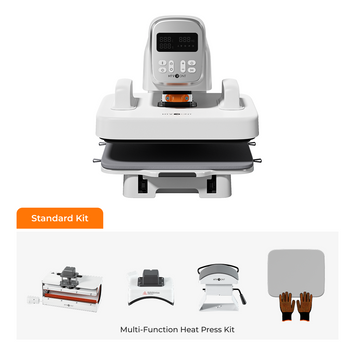
2. Quick Device Reality Check: Tumbler Heat Press vs. T‑Shirt Press
Both are heat presses, but the heating and pressure contact are completely different—so the common failure points are different too. A tumbler heat press is designed for cylinders with wrap‑around, curved heating, and success comes down to whether your print is wrapped tightly and evenly, whether the seam area is fully compressed, and whether the cup shape matches the press. A T‑shirt press relies on large, even, flat pressure and is more sensitive to uniform pressure, moisture in fabric, and the heat tolerance of the garment and transfer material. In one sentence: a tumbler heat press is all about wrap, seam, and fit; a T‑shirt press is all about flatness, even pressure, and fabric condition.
With the device differences clear, let's tackle the three failure types that account for the vast majority of ruined tumblers.
3. The Three Big Failure Types (And What Usually Causes Them)
A) Bubbles and Blisters: Usually Trapped Air, Moisture, or Poor Contact
Bubbles form when something expands under heat between the sublimation paper and the tumbler surface—trapped air, moisture flashing into steam, or coatings outgassing. The most common causes are not wrapping tightly enough, moisture or oils on the surface, pressing too hot and too fast, and uneven pressure creating weak contact areas. Fast fixes: clean with a lint‑free cloth and alcohol, making sure the surface is fully dry before wrapping; tape edges securely, especially top, bottom, and the seam edge; eliminate wrinkles—use more tape rather than guessing; and if bubbling is severe, lower the temperature slightly while increasing time to avoid aggressive surface damage.
B) Fading and Weak Durability: Usually Wrong Blank or Incorrect Heat Load
Faded or weak prints almost always trace back to one of three root causes: the tumbler isn't actually sublimation‑coated, the ink or paper combination is mismatched, or the heat load is wrong—either too little heat causing incomplete transfer or too much heat causing yellowing and loss of detail. Fast fixes: confirm you're using true sublimation blanks, keep your ink and sublimation paper consistent and from reputable sources, run a simple step test on the same cup and artwork by adding 10–15 seconds per run or 5°C per run until results stabilize, and let the cup cool appropriately before handling to avoid scuffing while hot.
📖 Want to fully understand how paper choice affects your results?
C) White Seam Line: Almost Always Wrap Coverage or Seam Pressure
A seam line appears when a strip of the surface doesn't receive effective transfer—usually at the wrap overlap or the cup seam area. The most common causes: your print isn't wide enough to cover the full circumference, there isn't enough overlap or the overlap shifts during pressing, the seam area has loose contact, or a cup shape mismatch means the seam area doesn't compress evenly. Fast fixes: design and print with intentional overlap for stable compression without shifting, tape the overlap edge vertically in multiple spots and add a long strip to lock the overlap if needed, place the seam where your press applies the most consistent pressure, and for tapered cups, use an appropriate solution rather than forcing a mismatch.
Bubbles, fading, and seam lines are the big three. But there's another failure that looks like a printing problem but is actually a mechanical one.
4. Ghosting and Blur: Usually Heat‑Time Slippage, Not "Bad Printing"
If your image looks doubled or fuzzy, it's typically because the sublimation paper moved slightly after it started heating. Common causes include too little tape—taped only at the ends—movement during loading or unloading, and excessive pressure causing the wrap to creep. Fixes: tape key edges thoroughly, especially the overlap and top and bottom edges; do a full wrap check before pressing by pressing down around the cup to confirm no lifted areas; and don't twist or rub immediately after pressing—let the cup stabilize and cool first.
You know the failure types and their fixes. But when you're staring at a ruined tumbler and don't know where to start, follow this order.
5. A Fast Troubleshooting Order (Save This)
When something goes wrong, troubleshoot in this specific order: first, check the blank—is it truly sublimation‑ready, clean, and dry? Second, check the wrap—any wrinkles, a loose seam, or insufficient tape? Third, check heat and pressure—is the press fully preheated with consistent, repeatable pressure? Fourth, check the print itself—is it mirrored correctly, printed on the correct side of the paper, and neither too dark nor too light? Most failures get solved in steps one and two—no need to blindly crank the temperature.
One of the most common questions that comes up during troubleshooting is about press time. Here's the honest answer.
6. "How Long Should I Press?" Use It as a Starting Point, Not a Rule
There is no universal time. Different presses, cup wall thicknesses, coatings, room temperatures, and wrap qualities all change the result. The reliable approach is to start from a reasonable baseline, then dial in with small step tests and the troubleshooting logic above. For a dedicated guide on building that baseline for tumblers, start with how long to heat press a sublimation tumbler, then fine‑tune for your specific setup.
Troubleshooting solves problems after they happen. These six habits prevent them from happening in the first place.
7. Six Habits That Dramatically Improve Consistency
-
Standardize your workflow: clean → dry → wrap → full check → press → hot peel
-
Keep notes by batch: blank source, paper and ink combination, time and temperature, and results
-
Test one before production when anything changes—blank, coating, design, or paper
-
Always "over‑tape" the seam area—it's where most failures happen
-
Don't rely on random online settings—use them only as a starting point and adjust for your setup
-
Prioritize stability over speed: a tight wrap and consistent heat beats "fast" every time
Quick Reference: Common Tumbler Heat Press Failures
Use this table to quickly match what you see on your tumbler to the most likely cause and fix. Work through the checks in order for the fastest diagnosis.
| Symptom |
Most Likely Cause |
Quick Test |
Best Fix |
| Bubbles or blisters |
Trapped air or moisture |
Check wrap tightness; pre‑press dry |
Tape edges securely; lower temp slightly, increase time |
| Faded or dull colors |
Not a sublimation blank or wrong heat load |
Verify blank coating; step‑test time and temp |
Use confirmed sublimation blanks; adjust heat settings in small increments |
| White line at seam |
Print too narrow or loose seam pressure |
Check print width and overlap coverage |
Add intentional overlap; tape seam area thoroughly |
| Ghosting or blur |
Paper shifted during heating |
Check tape coverage on all edges |
Tape edges generously; avoid bumping the press; hot peel promptly |
| Yellowing or scorching |
Too hot or too long |
Reduce temp 5–10°C; shorten time |
Calibrate with IR thermometer; verify actual platen temperature |
| Patchy or uneven transfer |
Uneven pressure or inconsistent wrap |
Check pad condition and wrap smoothness |
Replace worn pad; use more tape for even tension |
Frequently Asked Questions
Why does my sublimation tumbler have bubbles after pressing?
Bubbles form when trapped air or moisture expands under heat between the sublimation paper and the tumbler surface. The most common causes are wrapping the paper too loosely, residual moisture or oils on the tumbler surface, pressing at too high a temperature causing the coating to outgas, and uneven pressure creating weak contact zones. Clean the tumbler thoroughly with alcohol, let it dry completely, wrap the paper tightly with generous tape at all edges, and if bubbling persists, slightly lower the temperature while increasing the press time.
What causes a white line at the seam of a sublimated tumbler?
A white seam line appears when a strip of the tumbler surface doesn't receive effective dye transfer—usually at the wrap overlap or the cup seam area. The most common causes: your printed design isn't wide enough to cover the full circumference, the overlap shifts during pressing, the seam area has looser contact than the rest of the cup, or the cup shape doesn't match the press. Fix it by designing with intentional overlap, taping the overlap edge in multiple spots, placing the seam where your press applies the most consistent pressure, and avoiding forcing mismatched cup shapes into incompatible presses.
How do I prevent ghosting on my sublimation tumbler?
Ghosting—a shadow or double image—happens when the sublimation paper shifts during heating. Prevent it by taping generously at the overlap, top, and bottom edges rather than just the ends. Do a full wrap check before pressing, pressing down around the cup to confirm no areas are lifted. When removing the tumbler from the press, handle it carefully to avoid bumping the paper. Always hot peel—remove the paper while it's still warm, as letting it cool on the tumbler increases the risk of ghosting.
How long should I press a sublimation tumbler?
There is no single universal time—different presses, cup thicknesses, coatings, room temperatures, and wrap qualities all affect the result. Start with the manufacturer's recommended baseline for your specific tumbler and press, then fine‑tune with small step tests: add 10–15 seconds per test run or adjust temperature by 5°C increments until results stabilize. Keep notes for each blank type so you can reproduce successful settings. For a comprehensive guide on building your baseline, see our article on how long to heat press a sublimation tumbler.
Conclusion
A tumbler heat press isn't difficult because it's "advanced"—it's difficult because it's sensitive to wrap quality, seam compression, correct blanks, and stable heat. Once you lock down those basics, bubbling, fading, and seam lines drop fast. Use the troubleshooting order above, keep notes on what works for your specific setup, and remember: most failures get solved before you ever touch a temperature setting.


 Cart Unlocks Add-On Deals