[Hoodies Tutorials] How to Make A Hoodie with HTVRONT Auto Heat Press
Written by Mokua Brian
|
Published on
|
Modified on
|
Reading time for 10 min
Table of Contents
Introduction: Combining HTV & Sublimation on Hoodies
Heat pressing designs is one of the easiest and most rewarding ways to customize your hoodies with stunning, durable creations.
In this comprehensive DIY guide, we'll show you how to combine both Heat Transfer Vinyl (HTV) and sublimation paper to create vibrant, full-color prints that feature textured vinyl elements — all using an auto heat press. This method is perfect for crafting bold designs with intricate details and added texture, while the auto heat press ensures consistent pressure and temperature for professional-quality results.
We'll cover everything from materials and step-by-step instructions to optimizing your heat press settings and troubleshooting common challenges. Whether you're a beginner or a seasoned crafter, this guide will help you achieve durable, polished projects every time.
Why does this matter in 2026? The global custom apparel market is projected to reach $17.68 billion by 2034, and hoodies remain one of the most popular canvases for custom designs. Combining HTV and sublimation opens up endless creative possibilities — and with the right techniques, you can produce professional results from your home workshop.
📖 New to heat pressing?
Start with our Heat Press DIY for Beginners guide to understand the fundamentals before diving into this project.
Supplies & Materials You'll Need
Before starting this project, gather the following materials and supplies:
Hoodies: Make sure your hoodie is made of at least 65% polyester, cotton, or a blend.
Rainbow White Glitter HTV: This is sublimation-compatible HTV that will make your transfer process much easier. Do not use regular HTV for the sublimation step.
Sublimation Paper: For printing your designs using a sublimation printer such as the Epson EcoTank. Use quality sublimation ink for best results.
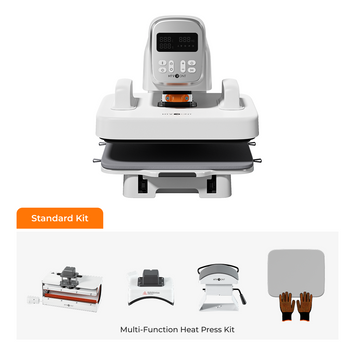
Heat Press Machine: Such as the HTVRONT Auto Heat Press for providing the right heat and even pressure.
Cutting Machine: Such as LOKLiK iCraft to cut your designs into accurate shapes.
Weeding Tool: For removing excess parts from your cut designs.
Teflon Sheet / Parchment Paper: For protecting your hoodie and vinyl during heat pressing.
Heat Resistant Tape: For holding your designs in place during pressing to prevent movement.
Step 1: Creating Your Designs
Start by conceptualizing the design you want to heat press onto your hoodie. You can use design software such as LOKLiK IdeaStudio, Silhouette Studio, or even Microsoft Word. Alternatively, you can hire a graphic designer to create a custom design for your project.
In your design, you'll need to separate the colorful, detailed parts from the solid or textured elements:
For Sublimation areas: Use the colorful and detailed parts of your design.
For HTV areas: Use the solid or textured parts (e.g., outlines, blocks of color).
💡 Pro Tip: Make sure your designs are properly aligned so that the HTV areas and sublimation areas fit together perfectly on your hoodie. Measure twice, cut once!
Step 2: Printing & Cutting Your Designs
Once your designs are ready, it's time to print. Remember to mirror your designs so they transfer accurately onto your hoodie — this is especially important when working with letters or numbers.
For sublimation design: Print using sublimation paper and an inkjet printer loaded with sublimation ink. Let the ink completely dry before handling the paper to prevent smudging.
For HTV design: Print the HTV design on the Glitter HTV paper with the shiny side facing upward. Then stick the printed paper on the cutting pad of your cutting machine with the shiny side facing downward. Use your cutting machine's software to set the cutting measurements and cut.
Finally, use a weeding tool to remove the excess vinyl so your design is perfectly shaped.
Now make sure your hoodie is very clean. Pre-press it for about 5-10 seconds to remove any moisture or wrinkles that could interfere with the transfer. Use a lint roller to remove any debris or particles from the fabric.
Pressing Rainbow Glitter HTV Design
Place the HTV design on the part of the hoodie you want to customize. For a zipped hoodie with a circular design that the zip cuts through, divide the design into two halves and work on the left side first, then the right.
Set your heat press to about 300-320°F and place the hoodie with the design on the lower platen.
Cover the design with parchment paper or a Teflon sheet and press for 10-15 seconds with medium pressure.
Check the peel type of your HTV. For a cool peel, let it cool completely before peeling. For a hot peel, peel the carrier sheet immediately after pressing.
For a hot peel, peel the carrier sheet immediately after pressing to reveal the glitter design.
Pressing Sublimation Design
Now take the printed sublimation paper with the ink side facing down and place it over the HTV design you've already pressed.
Cover it with parchment paper or a Teflon sheet.
Reset your heat press to about 380-400°F and press for about 40-60 seconds with medium to firm pressure.
Peel the sublimation paper while it's still hot to reveal your design.
Carefully peel the sublimation paper while it's still hot to reveal your fully transferred design.
📌 For zipped hoodies: When the zip cuts through your design, divide the design into two parts. Work on the left side first, then proceed to the right side. The video tutorial below illustrates this technique.
Step 4: Final Press for Durability
Once you've applied both the HTV and sublimation designs, do a final press on the hoodie to ensure proper adhesion and durability.
Cover the designed area with parchment paper or a Teflon sheet and heat press again for about 5-10 seconds.
Wait at least 24 hours before washing or wearing your hoodie to prevent peeling or tearing of the design.
And that's it — you're done! Here's how our zipped hoodie project turned out:
This process is quite approachable even for beginners. To become a pro, practice as much as possible and experiment with different designs and techniques.
🎥 Watch the full tutorial
Check out this HTVRONT YouTube Shorts video for a visual guide on creating stunning designs on zipper hoodies.
We recommend watching several videos and practicing as much as possible so your projects are always flawless and professional-looking.
Pro Tips and Tricks for Success
Working with both HTV and sublimation paper on the same project can be challenging. Here are some tips to ensure your project runs smoothly:
Do Some Testing: Test on a scrap piece of similar fabric before doing the actual project to check compatibility.
Use Sublimation-Friendly HTV: Make sure you purchase sublimation-compatible HTV (like Glitter HTV) if you're following the steps in this guide. If using regular HTV, sublimate first, then apply the HTV — because regular HTV can melt under sublimation temperatures.
Double-Check Your Heat Settings: HTV and sublimation require different temperatures. Recheck your heat press settings as you move between applications.
Use Quality Materials: The quality of your sublimation prints depends on using top-quality sublimation ink and paper. Invest in the best you can afford.
Use Protective Gear: Sublimation ink can produce fumes when heated — wear a mask to prevent inhalation. Heat-resistant gloves will also protect you from accidental burns.
Practice Patience: The entire application process requires patience to ensure each step is done properly.
Solving Common Issues During Transfer
Working with HTV and sublimation can be challenging. Here are common issues you might encounter and how to solve them.
1. HTV Peeling After Application
Problem: Your HTV designs might start peeling or lifting off your fabric after application, especially around the corners.
Cause: Moisture in the fabric or incorrect heat settings.
Solution: Ensure the hoodie is clean and smooth before application. Pre-press it for about 5-10 seconds to remove moisture. Double-check the optimal temperature for your HTV.
2. Fading Colors After Sublimation
Problem: The sublimation colors appear faded or washed out.
Cause: The sublimation ink hasn't transferred properly or fully.
Solution: Increase your heat press temperature by 5-10°F and press for 15-20 seconds with even, firm pressure. Ensure the sublimation paper is correctly aligned over the HTV. Use heat-resistant tape to prevent movement during pressing.
3. Smudged Prints After Pressing
Problem: Images appear blurry or smudged after pressing.
Cause: The sublimation paper shifted during pressing, or the ink wasn't fully dry before handling.
Solution: Make sure the sublimation paper is positioned accurately and secured with heat tape. Use medium pressure — too much pressure can cause ink to bleed. Also, ensure your heat press is on a stable surface.
4. HTV Warping or Shrinking
Problem: The HTV design warps or shrinks during application.
Cause: Incorrect heat settings leading to overheating or underheating.
Solution: Stick to recommended temperatures: 300°F for HTV and 380°F for sublimation. Avoid using too much pressure or pressing for too long. When unsure, check with your manufacturer for the correct heat settings.
5. Carrier Sheet Peeling with Design
Problem: The carrier sheet lifts the HTV design when you try to peel it.
Cause: You're not following the correct peel type for your HTV.
Solution: For hot peels, peel immediately after pressing. For cool peels, wait until the design has completely cooled. If the problem persists, repress for an additional 3-5 seconds and try again.
Frequently Asked Questions (FAQs)
Which fabric material is best for sublimation and HTV application on hoodies?
The best fabrics are cotton, polyester, and blends. Dark fabrics actually produce the most vibrant and colorful designs, making them an excellent choice for both sublimation and HTV projects. Look for hoodies with at least 65% polyester content for the best sublimation results.
Can I use a household iron instead of a heat press?
Yes, it's possible. However, you'll likely face challenges applying even, firm pressure — especially with large or intricate designs. A heat press is recommended because it provides consistent heat and pressure across the entire design. If you're a seasoned crafter, investing in a heat press is well worth it.
What sublimation-compatible HTVs are available on the market?
Several brands offer sublimation-friendly HTV. Common options include: White Glitter HTV, Siser EasySubli, and certain flocked HTVs. HTVRONT also offers sublimation-compatible HTV that works seamlessly with this process. Always check the product specifications to ensure compatibility.
Does HTV go on top of sublimation, or vice versa?
It depends on the materials you're using. If you're using sublimation-friendly HTV (like Glitter HTV), you can apply the HTV first and then sublimate. For regular HTV, do the sublimation first, then add the HTV layer — because regular HTV can melt under the high temperatures required for sublimation (380-400°F).
How do I store unused HTV and sublimation paper in good condition?
Store your HTV rolls and sublimation papers in a cool, dry place away from direct sunlight to prevent warping. Avoid humid areas, as moisture can affect the quality of the adhesive on your HTV. A sealed container or drawer works best for long-term storage.
My design doesn't look vibrant on my dark hoodie — what went wrong?
If your design appears dull or faded on a dark hoodie, the sublimation ink may not have transferred properly. First, confirm you're using sublimation-compatible HTV (like Glitter HTV) as your base layer. Then check your heat press temperature — it should be 380-400°F for the sublimation transfer step. Also ensure you're pressing for the full 40-60 seconds with firm, even pressure. If you're using regular HTV instead, remember that it's not sublimation-friendly and won't produce vibrant results with this method.
Conclusion
Designing your hoodies (or any other fabric) using HTV and sublimation is a unique and exciting way to express your creativity. You can do this on both light-colored and dark-colored fabrics with ease.
This guide has provided you with all the steps required to make your project a success. Go through the video provided and watch similar tutorials to sharpen your skills when working with HTV and sublimation on different projects.
Remember, even if you're a beginner, all you need is a little practice — combined with patience — and you'll be crafting like a pro in no time. The global custom apparel market is projected to reach $17.68 billion by 2034, so there's never been a better time to develop your skills and turn your passion into a business.
We wish you all the best in your next crafting project! Share your experience with us — we'd love to know how it turned out. Happy Crafting!
✅ Quick Checklist: Your Hoodie HTV + Sublimation Project
Design & separate — Split your design into HTV (solid/textured) and sublimation (colorful/detailed) layers
Print & cut — Mirror designs, print on correct media, cut with cutting machine, weed excess
Prep hoodie — Pre-press 5-10 seconds, lint-roll to remove debris
Apply HTV — Press at 300-320°F for 10-15 seconds, peel according to type (hot or cool)
Sublimate — Press at 380-400°F for 40-60 seconds with medium-firm pressure
Final press — 5-10 seconds for durability
Aftercare — Wait 24 hours before washing, wash cold, air dry, turn inside out
📚 Keep Learning: More Guides to Level Up Your Craft
Explore these related resources to deepen your knowledge and master new techniques:


 Cart Unlocks Add-On Deals