Introduction
When it comes to creating custom designs on fabric, mugs, tumblers, and more, two popular methods often come up: heat press and sublimation. While these terms are sometimes used interchangeably, they are distinct processes with their own advantages, limitations, and ideal applications. Understanding the difference is crucial whether you're starting a crafting business, making personalized gifts, or exploring a new creative hobby. This guide breaks down both methods in detail—how they work, their pros and cons, and when to choose each one.
Let's start by defining the heat press method and how it actually works.
What Is Heat Press?
A heat press uses heat and pressure to bond a pre‑printed or pre‑cut design onto a substrate—typically through heat transfer vinyl (HTV), transfer paper, or printable vinyl.
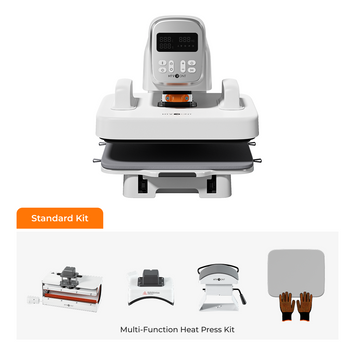
The term "heat press" refers to both the machine and the transfer process. The machine applies controlled heat and pressure for a set time, activating the adhesive on the transfer medium and bonding it to the surface. Unlike sublimation, the design sits on top of the material rather than embedding into it.
How Does Heat Press Work?
-
Design Preparation: Create your design using software like Adobe Illustrator, Cricut Design Space, or HTVRONT IdeaStudio.
-
Printing or Cutting: The design is either cut from heat transfer vinyl using a vinyl cutter—followed by weeding—or printed onto heat transfer paper or printable vinyl.
-
Positioning: The vinyl or transfer paper is placed on the substrate—a T‑shirt, mug, or other item—in the desired position.
-
Heat Press Application: The heat press machine applies heat and pressure for a specific duration, bonding the design to the material.
Advantages of Heat Press
-
Versatility: Works on cotton, polyester, ceramics, and wood—far more material options than sublimation.
-
Cost‑Effective: Heat transfer vinyl and transfer paper are relatively affordable, making this method accessible for beginners.
-
No Special Coating Required: Unlike sublimation, standard uncoated materials work perfectly fine.
-
Vivid Colors on Dark Surfaces: HTV and transfer paper produce bright, opaque designs even on black and dark fabrics.
Limitations of Heat Press
-
Durability: Designs may peel, crack, or fade over time, especially after repeated washing.
-
Textured Feel: The design sits on top of the material, often leaving a noticeable texture or stiff feeling.
-
Slower for Large Orders: Applying designs one at a time can be time‑consuming for large‑scale production.
Now let's look at sublimation—a fundamentally different process with a completely different set of strengths.
What Is Sublimation?
Sublimation is a chemical process where heat turns solid dye into a gas, which then permanently bonds to a polymer‑coated surface—creating a design that's embedded into the material itself.
Unlike heat press transfers that sit on top, sublimation infuses the design into the substrate. This requires specialized equipment: sublimation printers, sublimation ink, and items with a polymer coating or high polyester content.
How Does Sublimation Work?
-
Design Creation: A design is created using graphic design software.
-
Printing: The design is printed onto sublimation paper using a sublimation printer and sublimation ink.
-
Preparation: The printed paper is placed face‑down on the substrate—a polyester T‑shirt, coated mug, or tumbler.
-
Heat Application: Heat and pressure are applied using a heat press or convection oven. The ink turns into gas, penetrates the surface, and bonds permanently.
Advantages of Sublimation
-
Durability: Sublimated designs are permanent—they won't peel, crack, or fade, and they become part of the material.
-
Vivid, Photo‑Quality Colors: Produces bright, vibrant, high‑resolution designs with smooth gradients.
-
No Texture: Because the design is embedded, there's no raised surface or stiff feel.
-
Great for Polyester and Coated Items: Works exceptionally well on polyester fabrics and polymer‑coated surfaces like mugs, tumblers, and phone cases.
Limitations of Sublimation
-
Material Restrictions: Only works on high‑polyester fabrics or polymer‑coated items. Cannot be used on cotton or uncoated surfaces.
-
Specialized Equipment: Requires a sublimation printer, sublimation ink, and compatible substrates—a higher upfront investment.
-
Not Visible on Dark Surfaces: Sublimation uses no white ink, so designs won't show on dark or black materials.
With both methods defined, let's put them side by side so you can see the differences at a glance.
Key Differences Between Heat Press and Sublimation
Heat press bonds designs on top of a material using adhesive transfer media; sublimation infuses dye directly into a polymer surface. Each excels in different scenarios.
| Feature |
Heat Press |
Sublimation |
| Process |
Transfers design using HTV or transfer paper with heat and pressure. |
Uses heat to convert dye into gas, which bonds with a polymer surface. |
| Materials |
Works on a variety of materials (cotton, polyester, ceramics, wood). |
Requires polyester or polymer‑coated surfaces (mugs, tumblers). |
| Durability |
Designs may peel, crack, or fade over time. |
Permanent designs that won't peel, crack, or fade. |
| Finish |
Leaves a textured finish that sits on top of the surface. |
Creates a smooth, embedded finish with no texture. |
| Color on Dark Surfaces |
Works well with opaque vinyl or transfer paper. |
Does not work on dark surfaces due to lack of white ink. |
| Equipment Cost |
Heat press machines are generally affordable; materials are inexpensive. |
Sublimation printers and materials are more expensive. |
| Versatility |
Works on a wide range of materials. |
Limited to polyester or polymer‑coated items. |
| Production Speed |
Slower for large orders due to manual application. |
Faster for large orders with consistent results. |
Choosing the right method depends on your materials, budget, and the kind of designs you want to create.
When to Use Heat Press vs. Sublimation
Choose Heat Press If:
- You want to work with a variety of materials, including cotton and dark fabrics.
- You're creating designs with heat transfer vinyl or transfer paper.
- You're on a budget and need a cost‑effective solution.
- You're creating small batches or one‑off custom designs.
Choose Sublimation If:
- You need durable, permanent designs that won't fade, peel, or crack.
- You're working with polyester fabrics or polymer‑coated items like tumblers or phone cases.
- You want vibrant, photo‑quality images with no texture.
- You're producing larger quantities and need a faster, more consistent process.
Can Heat Press and Sublimation Be Used Together?
Absolutely—a heat press machine is actually required to apply the heat and pressure needed for the sublimation process. The two methods complement each other seamlessly.
For example, you can use the same heat press machine to apply HTV to a cotton T‑shirt in the morning and sublimate a polyester jersey or coated mug in the afternoon. While the processes are distinct, they share the same core equipment—the heat press—making them a natural pair in any crafter's toolkit.
Frequently Asked Questions
Can I use the same heat press machine for both HTV and sublimation?
Yes. A standard heat press works for both methods. Just ensure you clean the platen between projects and use the correct temperature and time settings for each material. Some crafters even dedicate separate lower platens for HTV and sublimation to avoid cross‑contamination.
Which method is better for a beginner?
Heat press with HTV is generally more beginner‑friendly. It requires less expensive equipment, works on a wider range of materials, and mistakes are easier to catch and fix before pressing. Sublimation has a steeper learning curve and a higher upfront cost but produces permanent, professional‑grade results.
Why can't I sublimate on cotton?
Sublimation dye bonds chemically to polyester and polymer coatings. Cotton lacks the necessary polymer structure, so the dye simply washes out. You can sublimate onto cotton only if the shirt has a special polyester coating or if you use a sublimation‑compatible transfer medium.
Is sublimation more durable than heat press?
Generally, yes. Sublimation embeds the design into the material, so it won't peel, crack, or fade. Heat press designs sit on top and can wear down over time—especially with frequent washing. However, high‑quality HTV applied correctly can still last 50+ washes.
Conclusion
While both heat press and sublimation use heat to transfer designs, they are fundamentally different processes with unique strengths. The heat press method is versatile, budget‑friendly, and works on nearly any material—perfect for beginners and those who value flexibility. Sublimation delivers unmatched durability and vibrant, photo‑quality results, but requires specialized equipment and polymer‑based substrates. Your choice ultimately depends on your budget, the materials you want to work with, and the type of designs you want to create. By understanding both methods, you can confidently pick the right tool for each project—or better yet, add both to your creative arsenal.


 Cart Unlocks Add-On Deals