In the world of creative crafting and personalized products, few materials are as fun and interactive as Sublimation Flip Sequin. Imagine a pillow or notebook that looks like a shiny, decorative surface—until you swipe your hand across it and a hidden design magically appears.
In the world of creative crafting and personalized products, few materials are as fun and interactive as Sublimation Flip Sequin.
If you've ever seen a pillow or notebook where a hidden image suddenly appears when you swipe the sequins, you've already experienced the magic of this unique material.
Flip sequins combine sublimation printing technology with sparkling reversible sequins, allowing DIY creators to design products that literally change with a touch. One swipe can hide a design, and another swipe reveals it again.
Because of this playful interaction, sublimation flip sequins have become increasingly popular among:
DIY crafters
small handmade businesses
gift makers
custom apparel creators
In this guide, we'll explore what sublimation flip sequins are, how they work, and how you can use them to create fun personalized DIY projects.
So what exactly is this material, and why does it work the way it does? Let's break it down.
Chapter 1: What Is Sublimation Flip Sequin?
Sublimation Flip Sequin is a special textile material made of reversible sequins attached to a fabric backing. Each sequin has two sides: a white printable surface (for sublimation) and a decorative metallic surface (usually gold, silver, or rainbow). When brushed in one direction, the sequins show their shiny side; brushed the other way, the sublimated image underneath is revealed.
Sublimation Flip Sequin is a special textile material made of reversible sequins attached to a fabric backing.
Each sequin has two sides:
A white printable surface (for sublimation)
A decorative metallic surface (usually gold, silver, or rainbow)
When brushed in one direction, the sequins show their shiny decorative surface.
When brushed in the opposite direction, the white side appears—revealing the sublimated image underneath.
This creates a unique visual effect: shiny surface → swipe → custom printed design appears.
This reversible effect is why many crafters call it "magic sequin fabric."
But how does sublimation actually work on sequins? Let's look at the process.
Chapter 2: How Sublimation Printing Works on Flip Sequins
Sublimation printing transfers dye into materials using heat and pressure. Instead of sitting on the surface like vinyl, sublimation dye infuses directly into the material, creating a long-lasting and vibrant design. To create a flip sequin project, you'll need a sublimation printer, ink, transfer paper, and a heat press.
Sublimation printing transfers dye into materials using heat and pressure.
Instead of sitting on the surface like vinyl or ink, sublimation dye infuses directly into the material, creating a long-lasting and vibrant design.
To create a sublimation flip sequin project, you'll typically need:
When heat is applied, the ink transforms into gas and bonds permanently with the printable side of the sequins.
Typical settings are:
Temperature: 374–392°F (190–200°C)
Time: 40–60 seconds
Pressure: medium
💡 The Most Important Step: Before pressing, make sure all sequins are brushed in the same direction with the white printable surface facing up. If the sequins are uneven, parts of the design may not transfer correctly—and you'll end up with a partial or incomplete image.
So why are crafters and small businesses so excited about this material? Let's look at what makes it special.
Chapter 3: Why Sublimation Flip Sequins Are So Popular
Flip sequin products are interactive—users can swipe the surface to reveal or hide designs, making them feel surprising and playful. They're also perfect for personalized gifts because sublimation allows full‑color printing of photos and custom artwork. And they're perfect for social media—the swipe‑to‑reveal transformation is visually satisfying and easily shareable.
Interactive Designs
Most printed items are static. Flip sequin products are interactive.
Users can swipe the surface to reveal or hide designs:
Swipe once → reveal the design
Swipe again → return to a sparkling surface
This small moment of transformation makes products feel surprising and playful, which is why they are especially popular for gifts.
Perfect for Personalized Gifts
Sublimation allows full-color printing, which makes flip sequins perfect for customized items like:
photo pillows
custom notebooks
children's clothing
backpacks
decorative wall items
The hidden image effect turns an ordinary product into something memorable.
Perfect for Social Media Content
The swipe-to-reveal transformation is visually satisfying and perfect for short videos.
Many DIY creators share flip sequin transformations on social platforms, where the reveal effect easily grabs attention. It's the kind of content that gets shared—and that's gold for small businesses.
Curious to see the process in action? Here's a real project I recently tried.
Chapter 4: A Real DIY Project: Sublimation Flip Sequin Notebook
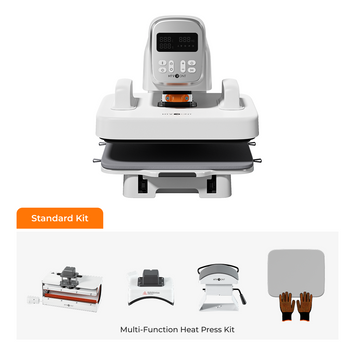
One of the most fun projects I recently tried was creating a custom flip sequin notebook cover using the HTVRONT H10 Portable Heat Press. The results were surprisingly fun—and watching the hidden illustrations appear with a simple swipe felt almost magical.
One of the most fun projects I recently tried was creating a custom flip sequin notebook cover.
Instead of using a pillow or shirt, I wanted to experiment with something different.
Using the HTVRONT H10 Portable Heat Press, I sublimated two cartoon illustrations directly onto a notebook covered with sublimation flip sequins.
The results were surprisingly fun and satisfying.
Watch the DIY Process
Watch how a Sublimation Flip Sequin notebook is created using the H10 Portable Heat Press, revealing cute cartoon cat and dog designs.
Step 1: Prepare the Design
For this project I used two playful graphics:
a cartoon cat illustration
a cartoon dog illustration
The designs were printed using sublimation ink and transfer paper. I recommend using high‑contrast, bold designs for flip sequins—subtle gradients don't show up as well on the sequin surface.
Step 2: Brush the Sequins
Before pressing, it's important to brush all sequins upward so the white printable surface is visible.
If the sequins are uneven, parts of the design may not transfer correctly. I used a soft brush to make sure every sequin was lying flat and facing the same direction.
Step 3: Heat Press the Notebook
The design was transferred using the H10 Portable Heat Press, which is perfect for smaller projects like notebooks.
Portable presses allow better control and positioning when pressing non‑standard surfaces. I used a piece of parchment paper between the press and the sequins to protect the material and ensure even heat distribution.
Step 4: Reveal the Hidden Image
At first the notebook simply looked like a shiny sequin surface.
But when the sequins were brushed downward, a cute cartoon cat and dog illustration appeared.
The transformation felt almost magical—and it's that moment of surprise that makes flip sequin projects so rewarding.
💡 My Takeaway: If you're looking for a project that combines sublimation with a "wow" factor, flip sequin notebooks are a great place to start. They're small enough to practice on, forgiving enough to learn from, and the results are genuinely impressive.
Notebooks are just the beginning. Here are other popular products you can make with flip sequins.
Chapter 5: Popular DIY Products Made With Flip Sequins
Sublimation flip sequins can be used on a wide variety of products: pillows for photo gifts and home décor, T‑shirts (especially popular with kids), bags like backpacks and totes, and notebooks as shown in the project above.
Flip Sequin Pillows
These are one of the most popular sublimation flip sequin products. They are especially popular for wedding gifts, anniversary presents, photo gifts, and home decoration.
Flip Sequin T-Shirts
Flip sequin clothing is especially popular among kids because the designs change with a swipe. It's also a great way to make personalized clothing for family reunions or birthday parties.
Flip Sequin Bags
Backpacks, tote bags, and cosmetic bags often use flip sequins to create eye‑catching surfaces. They're functional and fun—the best of both worlds.
Flip Sequin Notebooks
As shown in the DIY example above, flip sequin notebooks are a creative and unique craft project. They make great gifts for students, teachers, or anyone who loves stationery.
To make sure your projects turn out perfectly, here are some practical tips I've learned along the way.
Chapter 6: Tips for Perfect Sublimation Results
To get perfect results with sublimation flip sequins: brush sequins carefully so the white printable side is fully exposed, apply even pressure to ensure consistent ink transfer, use protective paper between the press and the material, and allow the material to cool before brushing the sequins again.
Brush Sequins Carefully
Always ensure the printable side is fully exposed before pressing. I've learned this one the hard way—if even a few sequins are flipped the wrong way, you'll get white spots in your design.
Apply Even Pressure
Consistent pressure ensures the sublimation ink transfers evenly. Uneven pressure can cause parts of your design to appear faded while other parts are fine.
Use Protective Paper
Place parchment or butcher paper between the press and the material. This protects both your heat press and the sequin surface from any ink transfer or residue.
Allow the Material to Cool
Wait for the material to cool before brushing the sequins again. Pressing too early can smudge the design or cause the sequins to warp.
✅ Quick Checklist: Before You Press
□ Are all sequins brushed flat with the white side facing up?
□ Is your heat press set to 374–392°F (190–200°C)?
□ Have you placed protective paper between the press and the sequins?
□ Are you applying even pressure across the entire design?
□ Have you allowed the material to cool before brushing the sequins?
✨ Flip sequins are where sublimation meets magic. Brush carefully, press evenly, and watch your designs come to life with a simple swipe.
Sublimation flip sequin is a reversible sequin material designed for sublimation printing. One side of each sequin is a white, printable surface, while the other side remains decorative (typically metallic gold, silver, or rainbow). When brushed in one direction, the sequins show their shiny side; brushed in the opposite direction, the sublimated design appears.
Can you sublimate on sequins?
Yes, as long as the sequins are coated with a sublimation‑ready white surface. Standard decorative sequins without this coating won't hold the sublimation ink, and the design will wash out or appear faded. Always look for "sublimation flip sequin" or "printable sequin" material to ensure compatibility.
What temperature is used for sublimation flip sequins?
Most materials are pressed around 374–392°F (190–200°C) for 40–60 seconds. However, always check the manufacturer's recommendations for your specific sequin material, as different brands may have slight variations in optimal temperature and time.
Why is my sublimation design incomplete?
This usually happens when the sequins were not brushed flat before pressing. If some sequins are facing the wrong direction (with the metallic side up instead of the white printable side), those areas won't absorb the sublimation ink. Always brush all sequins in the same direction with the white side facing up before pressing.
What products can be made with sublimation flip sequins?
You can make a wide variety of products, including flip sequin pillows, custom T‑shirts, bags (backpacks, totes, cosmetic bags), notebooks, and decorative crafts. The material works on any surface that can be heat pressed, provided the sequins are properly prepared with the white side facing up.


 Cart Unlocks Add-On Deals