Introduction
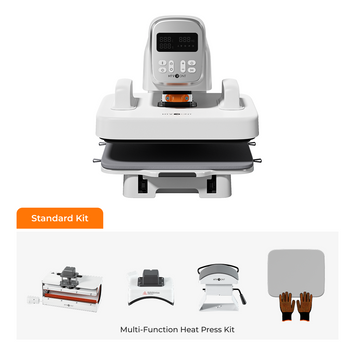
If you customize apparel with heat transfer vinyl, you'll eventually face the classic choice: Puff Vinyl (raised/3D HTV) or regular HTV (standard heat transfer vinyl). Both are applied using a heat press—often called a T‑shirt press when it's set up primarily for garments—but they behave very differently in visual impact, feel, wash durability, and how forgiving they are with fine details. One practical detail that trips people up and affects finish and durability is how you peel the carrier: regular HTV is typically a cold peel, while Puff Vinyl is usually best as a hot peel. That single habit change can make your results look dramatically more consistent.
Let's start by understanding what each material is designed to do after pressing—and how that impacts peeling.
What Are Puff Vinyl and Regular HTV?
Regular HTV is a non‑expanding film that stays flat after pressing and uses a cold peel for crisp edges. Puff Vinyl is formulated to expand during pressing, creating a raised 3D texture, and requires a hot peel to preserve the puffed surface. That single peel difference is often the make‑or‑break factor for consistent results.
Regular HTV (Standard Heat Transfer Vinyl)
Regular HTV is the classic, non‑expanding heat transfer film. After pressing, it stays relatively flat and consistent in thickness. People choose it for its clean, flat finish; excellent detail for small text and thin lines; and reliable, versatile performance across many designs and fabrics. Peel behavior: Regular HTV is commonly a cold peel, meaning you let it cool before removing the carrier. Waiting for it to cool helps the adhesive set cleanly and keeps edges crisp.
Puff Vinyl (3D / Raised Heat Transfer Vinyl)
Puff Vinyl is formulated to expand during pressing, creating a raised, dimensional look and a soft, cushiony feel. People choose it for its bold 3D effect that stands out from a distance, soft textured finish, and designs where dimension is the main style feature. Peel behavior: Puff Vinyl is generally best as a hot peel, meaning you peel the carrier while it's still hot. Peeling hot helps preserve the puffed texture and reduces the chance of pulling or flattening the raised surface. As a working rule: regular HTV → cold peel; puff → hot peel.
📖 New to heat transfer vinyl? Start with the fundamentals:
With the basics covered, let's compare how these two materials differ in the four areas that matter most.
Key Difference #1: Look & Style (Flat and Crisp vs. Bold and Raised)
Puff Vinyl delivers noticeably raised height with rounded, fuller edges—best for bold lettering and strong shapes. Regular HTV offers sharp edges and a predictable, classic, low‑profile finish ideal for intricate logos and small type. Fine details can soften or fill in as Puff expands, so if you need ultra‑sharp edges, regular HTV is the better match.
Key Difference #2: Wash Durability (Which One Holds Up Better?)
In most workflows, regular HTV is more forgiving and stable through frequent washing. Puff Vinyl can be very durable when pressed consistently, but it's more sensitive to settings—cracking, edge lifting, and flattened puff are common when temperature, pressure, or peel timing are off.
Common Puff Vinyl issues: cracking on ultra‑thin strokes and sharp points when fabric stretches; edge lifting from uneven pressure or textured garments; and flattened puff from over‑pressing or peeling too late. Hot peeling helps keep the texture cleaner. Regular HTV is thinner and flatter, so it's usually more stable—less prone to cracking in normal wear, with edges that tend to stay secure and work well for everyday garments that get frequent washing. Cold peeling rewards patience and helps prevent edge distortion.
Key Difference #3: Feel (Comfort and Texture)
Puff Vinyl feels soft, springy, and noticeably thicker—great when you want the print to feel like part of the design. Regular HTV feels lighter, flatter, and lower‑profile—often more comfortable for people who dislike heavy prints, and works especially well for large coverage areas.
Key Difference #4: Design Fit (What Artwork Works Best?)
A lot of "vinyl problems" are really artwork mismatch problems. Puff Vinyl excels with bold fonts, thicker lettering, simple icons, strong silhouettes, and designs with good spacing—especially streetwear, collegiate, and athletic looks where dimension adds value. Regular HTV excels with small text, thin lines, detailed logos, intricate illustrations, and high‑information layouts where precision and crisp edges matter most.
Quick Comparison: Puff Vinyl vs. Regular HTV
| Category |
Puff Vinyl (3D / Raised) |
Regular HTV (Standard) |
| Visual effect |
Bold, raised, high‑impact |
Flat, crisp, clean |
| Detail |
Less forgiving with tiny elements |
Great for fine detail |
| Feel |
Thicker, soft, "puffy" |
Thin, smooth, low‑profile |
| Peel type (common) |
Hot peel recommended |
Cold peel recommended |
| Durability |
Strong when pressed consistently; can crack/lift if not |
Generally more stable and forgiving |
| Best for |
Simple, bold designs that need "pop" |
Detailed logos, small text, everyday reliability |
What Really Controls Results: Consistency Matters More Than "Hotter"
No matter which vinyl you choose, consistent application is the difference between professional results and mystery failures. Puff Vinyl is especially sensitive, which is why many shops use a more controlled T‑shirt press (heat press) setup for Puff jobs. The biggest consistency drivers are accurate temperature, even pressure, a flat pressing surface, consistent time, and correct peel timing.
Simple Choosing Guide (Based on Your Goal)
-
Want a bold, 3D statement look? Choose Puff Vinyl, keep the design thicker and simpler, and plan on a hot peel approach.
-
Want sharp detail and reliable everyday wear? Choose regular HTV, especially for small text or intricate logos, and treat it as a cold peel process.
-
Want a premium look without extra risk? Use regular HTV for the main design and add Puff Vinyl as an accent—a keyword, outline, number, or small icon—and follow the appropriate peel style for each layer.
Frequently Asked Questions
Can I use the same heat press settings for Puff Vinyl and regular HTV?
No. Puff Vinyl typically requires specific temperature and pressure settings to achieve proper expansion without over‑curing. Regular HTV uses different parameters. Always check the manufacturer's instructions for each specific product—settings that work perfectly for standard HTV may flatten or under‑activate Puff Vinyl.
Why does my Puff Vinyl look flat after pressing?
This usually happens for one of three reasons: the temperature was too low to trigger full expansion, the press time was too short, or the carrier was peeled cold instead of hot. Puff Vinyl is designed to expand during pressing and needs to be hot peeled to preserve the raised texture. Check your settings and ensure you're peeling while the vinyl is still hot.
Which is better for detailed logos—Puff or regular HTV?
Regular HTV is the clear winner for detailed logos. Its flat, non‑expanding nature preserves fine lines, small text, and intricate shapes exactly as cut. Puff Vinyl expands during pressing, which can cause thin lines to soften, fill in, or lose definition. For maximum detail and precision, choose regular HTV.
Can I layer Puff Vinyl on top of regular HTV?
Yes, but with careful planning. Use regular HTV for the base layer and Puff Vinyl as the top accent. Press the regular HTV first with a cold peel, then apply the Puff Vinyl on top and hot peel. Always test on scrap fabric first—the heat from the second press can affect the base layer, so keep the second press time as short as the Puff Vinyl allows.


 Cart Unlocks Add-On Deals