Introduction
If you're asking "how much is a t-shirt press," the price can range widely based on size, heat consistency, features, and brand support. Hobbyists can start affordably, while production shops pay more for speed and reliability.
This guide walks you through every price tier, explains what drives cost differences between machines, and shows how a value-focused brand like HTVRONT serves DIYers, families, and small businesses with a complete, budget-friendly ecosystem that grows with your ambitions. We'll also give you honest comparisons with other brands and concrete accessory costs so you can budget with confidence.
1. Price Ranges at a Glance
Most buyers will land in the middle. Here's the typical spread:
- Budget clamshell presses: $100–$250
- Mid-range swing-away/clamshell: $250–$600
- Prosumer/small business: $600–$1,200
- Professional manual production: $1,200–$2,500+
- Pneumatic/automatic and specialty: $2,500–$8,000+
- Industrial high-volume: $8,000–$20,000+
In practice, home crafters often find value at $200–$500, while small apparel brands commonly start at $700–$1,500 for daily reliability. Beyond HTVRONT, brands like Cricut (EasyPress series, typically $100–$250) and VEVOR (swing-away presses in the $150–$400 range) also serve the DIY and small-business market, while Stahls' and Geo Knight cater to professional and industrial users at higher price points.
Those numbers give you a map. Now let's look at what actually separates a $150 press from a $1,500 one—understanding these differences is the key to making a purchase you won't regret.
2. What Drives the Price
Understanding cost comes down to core variables:
-
Heat and pressure consistency: Even heat prevents weak transfers; better pressure systems ensure uniform adhesion.
-
Build quality and duty cycle: Light frames suit occasional use; heavier, serviceable builds suit daily work.
-
Size and format: Common platens are 9x12, 12x15, 15x15, 16x20; swing-away offers clearance, clamshell saves space.
-
Features and controls: Digital temp/time, auto-open, quick heat-up, interchangeable platens; pneumatic boosts throughput.
-
Brand and support: Established service networks reduce downtime and total cost of ownership.
Now that you know what you're paying for at each level, let's see how HTVRONT positions itself within this landscape—and why its approach resonates with creators who want professional results without industrial overhead.
3. Why Choose HTVRONT? (Positioning & Product Line)
HTVRONT positions itself for DIY enthusiasts, family users, and small businesses—aiming to deliver simple, smart, stable, and reliable heat presses at relatively affordable prices. Beyond a single machine, HTVRONT offers a rounded lineup to match different projects and growth stages.
Heat Press Lineup for Diverse Needs
-
Auto Heat Press
- Who it's for: Side hustles and small shops needing consistency and speed.
- Benefits: Intelligent pressure and temperature management, auto-open convenience, quick recovery for batch runs.
- Typical budget fit: Often in the $300–$600 "prosumer" sweet spot.
-
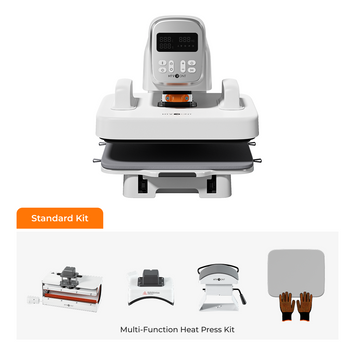
Multi Heat Press
- Who it's for: Creators who want to press apparel, hats, mugs, and plates with a single machine.
- Benefits: Modular component design with easy-to-swap attachments—switch between flat, hat, mug, and plate platens in seconds. Features automatic pressing function for hands-free operation and consistent results.
- Typical budget fit: $330–$400, offering exceptional versatility at a mid-range price point.
-
Mini Heat Press
- Who it's for: Beginners and detail work (patches, baby apparel, small decals).
- Benefits: Compact, fast to learn, ideal for tight spots and travel craft fairs.
- Typical budget fit: Entry-level pricing for hobby starts.
-
Hat Heat Press
- Who it's for: Cap-focused sellers and merch creators.
- Benefits: Curved platen and firm, even pressure across brims and panels.
- Typical budget fit: Lower-to-mid tier depending on features.
-
Tumbler Heat Press
- Who it's for: Personalized drinkware shops, sublimation creators.
- Benefits: Wrap-around heat for consistent 360° transfers on tumblers/cups.
- Typical budget fit: Mid-tier for reliable heat coverage.
-
Phone Case Heat Press
- Who it's for: Custom tech accessories and boutique gift sellers.
- Benefits: Precise fit and stable heating for small rigid substrates.
- Typical budget fit: Entry-to-mid with niche-specific jigs.
These targeted presses let you choose the right tool without paying for industrial capacity you don't need, while keeping operation simple and results stable.
Beyond Heat Presses: A DIY-Centric Machine Ecosystem
HTVRONT also provides complementary, high-quality DIY machines to complete the workflow:
-
DTF Printer: Enables vibrant, durable transfers across cotton blends and dark fabrics—pairs naturally with heat presses for apparel.
-
Cutting Machine (Vinyl Cutter): For precise HTV, vinyl decals, and stencil cutting—critical for clean edges and professional finishes.
-
Laser Engraver/Cutter: Expands into wood, acrylic, leather, and more—ideal for merch beyond textiles.
-
Paint-by-Numbers Machine: A creative, family-friendly device to produce guided artwork experiences and personalized gifts.
This ecosystem means you can start with a single press and scale into new product lines—shirts, hats, tumblers, phone cases, signage, and custom gifts—without juggling incompatible hardware or fragmented support.
Value Summary for HTVRONT
- Affordable pricing that respects DIY and small-business budgets.
- Simple, user-friendly operation with smart controls to reduce mistakes.
- Stable output via even heat and dependable pressure.
- Reliable quality tuned for frequent hobby use and small-batch commerce.
- A cohesive machine family covering pressing, printing, cutting, engraving, and creative art projects.
In short, for "how much is a t-shirt press," HTVRONT typically occupies the $200–$600 range that balances cost and capability for home creators and side hustles, with specialty presses priced sensibly for niche products.
You've seen the price ranges, what drives them, and the full product lineup. Now let's map those numbers to real-world scenarios with specific machine recommendations—so you can see exactly what to buy for your situation.
4. Matching Use Case to Budget
-
Hobby crafter (occasional): $150–$300
- Start with the Mini Heat Press for patches, baby apparel, and small decals—it's compact, affordable, and easy to learn on.
- If you want to press full-sized shirts, a 12x15 or 15x15 clamshell in this range works well. Pair it with a vinyl cutter for HTV projects.
-
Serious side-hustle / small shop: $300–$800
- The Auto Heat Press handles batch runs efficiently with auto-open convenience and intelligent pressure control—ideal for consistent daily production.
- Want to diversify into hats, mugs, and apparel with one machine? The Multi Heat Press ($330–$400) swaps between flat, hat, mug, and plate platens in seconds—giving you four product lines from a single investment.
- Add a DTF printer for vibrant, full-color designs on dark fabrics without the weeding hassle.
-
Daily small-batch production: $800–$1,500
- Invest in a larger platen (16x20 equivalent) with interchangeable platens for maximum flexibility.
- Pair with a DTF printer plus a cutting machine for HTV work; add a laser engraver to expand into wood, acrylic, and leather products.
-
High-volume production: $2,000–$8,000+
- Pneumatic/automatic lines deliver the speed and consistency needed for commercial output. HTVRONT serves most pre-industrial stages; industrial volume may require dedicated pro-grade equipment from brands like Stahls' or Geo Knight.
Your budget and machine are mapped out. But the sticker price isn't the full picture. Here are the hidden costs that catch first-time buyers off guard—and exactly what to budget for them.
5. Hidden Costs and Smart Savings
Accessories and supplies add up quickly. Here's what to plan for:
-
Teflon sheets: $10–$20 for a multi-pack. Replace every few months with heavy use—they protect your platen and prevent adhesive transfer between projects.
-
Heat-resistant tape: $5–$10 per roll. Essential for securing designs during pressing, especially on larger or multi-piece layouts.
-
Pressing pillows: $15–$30 each. Needed for garments with zippers, buttons, or thick seams—they create a flat pressing surface so your design adheres evenly.
-
Replacement silicone pads: $20–$40. Budget for one replacement per year with regular use; a worn pad causes uneven pressure and poor transfers.
-
HTV or sublimation supplies: $30–$100 to get started with a starter pack of vinyl rolls or sublimation paper and ink, depending on your chosen method.
-
Stand or cart: $30–$80. While optional, a dedicated stand saves your back and keeps your workspace organized for efficiency.
Total accessory budget: plan an extra $50–$150 for essentials when starting out, and $20–$50 every few months for consumable replacements. These items aren't optional—they directly affect your transfer quality and the longevity of your press. A reliable mid-tier press from a cohesive ecosystem also reduces long-term costs by minimizing misprints and integration headaches.
6. Frequently Asked Questions
How much should a beginner spend on a t-shirt press?
Beginners should budget $150–$300 for a reliable entry-level press. At this price, you'll get a 12x15 or 15x15 clamshell with basic digital controls. Avoid the cheapest sub-$100 options—they often have uneven heat distribution and weak pressure that leads to peeling designs and wasted materials. A Mini Heat Press is also a great low-cost starting point for small projects.
What's the difference between a $200 press and a $600 press?
The $600 press typically offers more even heat distribution across the entire platen, better build quality that handles daily use without frame flex, digital temperature and time controls with auto-open convenience, and a swing-away design that reduces burn risk and provides better workspace access. The $200 press works for occasional projects; the $600 press is built for consistent weekly production.
How does HTVRONT compare to other heat press brands?
HTVRONT focuses on the DIY-to-small-business segment with affordable, user-friendly presses backed by a cohesive ecosystem of compatible machines—DTF printers, vinyl cutters, laser engravers, and more. Brands like Stahls' and Geo Knight serve the professional and industrial markets at higher price points ($1,500+). Cricut's EasyPress series offers portability for hobbyists but lacks the pressure consistency of a dedicated clamshell or swing-away press. HTVRONT sits in the sweet spot for creators who want reliable results without industrial pricing—and the ability to expand their product line within a single, integrated system.
What additional costs should I budget for beyond the press itself?
Plan for Teflon sheets ($10–$20 per multi-pack), heat-resistant tape ($5–$10 per roll), pressing pillows ($15–$30 each), replacement silicone pads ($20–$40 yearly), and HTV or sublimation starter supplies ($30–$100). Budget an extra $50–$150 for essential accessories when starting out, plus $20–$50 every few months for consumable replacements.
Can I start a business with just one t-shirt press?
Absolutely. Many successful small businesses started with a single press. Begin with apparel using an Auto Heat Press or Multi Heat Press, and add specialty presses (hat, tumbler, phone case) as demand grows. HTVRONT's ecosystem makes it easy to expand without switching brands or learning entirely new systems—your workflow and settings transfer across machines, saving you time and reducing the learning curve.
7. Key Takeaways
- "How much is a t-shirt press" spans roughly $100 to $10,000+, but most creators land between $200 and $1,500.
- Prioritize even heat, consistent pressure, and the right platen size for your products. Budget an extra $50–$150 for essential accessories beyond the machine itself.
- HTVRONT's positioning—affordable, simple, smart, stable, and reliable—plus its multi-model heat presses and broader DIY machine lineup (DTF printers, cutting machines, laser engravers, paint-by-numbers machines) makes it a strong choice for DIYers, families, and small businesses ready to grow without industrial overhead.


 Cart Unlocks Add-On Deals