Introduction
Starting DTF printing feels a bit like buying your first "real" power tool: the sticker price matters, but what you really pay for is reliability, workflow, and how quickly you can turn learning into sellable results. A beginner shopping for a DTF printer will see prices all over the map—because the printer is only one part of the system. Your true budget depends on white ink stability, curing method, and the ongoing cost of DTF ink, DTF powder, and DTF transfer sheets. This guide breaks it down in a practical, order‑focused way so you can budget realistically from day one.
Let's start with the numbers—what you can actually expect to spend at each level.
Typical DTF Printer Price Ranges for Beginners
Most beginners who want consistent output should expect a realistic starting budget around $2,000 to $8,000—not just for the printer itself, but for a workable DTF printing setup that includes curing and pressing equipment. The price differences come down to white ink handling, printhead quality, and workflow reliability.
Entry‑Level (Budget Trial)
Best for experimenting, personal use, very small orders, and people who don't mind troubleshooting. Typical DTF printer price: $1,500–$3,500. Common trade‑offs include higher clog risk—especially with white DTF ink—less robust ink circulation and filtration, and inconsistent support, parts access, or documentation.
Beginner‑Business Sweet Spot (More Stable)
Best for beginners planning to sell, needing fewer failed prints, and valuing uptime. Typical DTF printer price: $3,500–$8,000. What you're usually paying for: better white ink handling, more consistent output in real DTF printing conditions, and fewer reprints—saving DTF transfer sheets, DTF powder, and ink.
Small Commercial / Light Production
Best for daily throughput, steady order volume, and repeatable color consistency. Typical DTF printer price: $8,000–$20,000+. Extra requirements include stronger ventilation and space for curing and powder handling, disciplined maintenance routines, and a spare parts plan to protect production.
Now that you know the tiers, let's look at what actually drives those price differences.
Why Prices Vary So Much (What Actually Matters)
DTF printing is a chain. You can have a decent printer and still produce poor transfers if ink control, powdering, and curing aren't consistent. Three factors drive most of the price variation: white ink management, printhead and electronics quality, and powder plus curing workflow control.
White Ink Management Is the Main Divider
White ink is where beginners struggle most. It settles quickly, clogs more easily, and magnifies every weak point in the ink path. Higher‑priced machines often include stronger circulation and recirculation design, agitation and better filtration, and improved pressure control with safer idle routines. In practice, that means fewer emergency cleanings and less wasted DTF ink.
Printhead + Electronics Ecosystem Affects Long‑Term Ownership
Your printhead, board ecosystem, and software stability influence print speed and consistency, troubleshooting difficulty, and replacement parts availability and total cost of ownership.
Powder + Curing Workflow Controls Yield
A transfer's durability depends heavily on how evenly you apply DTF powder and how consistently you cure it on the film. Even if the print looks great on the DTF transfer sheets, uneven powdering or unstable curing can cause poor wash durability, cracking and peeling, and texture issues leading to customer complaints.
📖 Want to understand the full DTF workflow before investing?
With the variables clear, here's a concrete example of what a mid‑range printer delivers.
Spotlight Example: Why the HTVRONT D1 DTF Printer Is $3,199 (And What You Get)
The HTVRONT D1 DTF Printer is positioned for beginners who want business‑capable throughput and reliability—not just a low entry price. Its value proposition, "Boost the speed of your shirt business," is grounded in measurable performance: an XP600 professional‑grade printhead reaching 16 ft²/h, printing an A3 transfer film in about 3.1 minutes and an A4 film in about 1.9 minutes, plus white ink circulation and offline maintenance to reduce the cleaning burden that often frustrates beginners.
The printer is just the start. Here's what else you'll need to budget for.
The Hidden Costs Beginners Often Miss
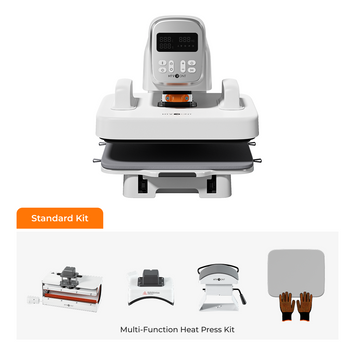
A DTF printer is only the beginning. To produce transfers consistently, you need consumables—film, powder, ink, and cleaning supplies—plus reliable curing equipment, a heat press for final application, and a realistic plan for maintenance time, especially during idle periods when white ink settles and cleaning cycles increase.
1. Consumables: Film, Powder, Ink, and Cleaning Supplies
Expect ongoing purchases of DTF transfer sheets (film) in the sizes you use most, DTF powder (hot‑melt adhesive powder), DTF ink (CMYK + white—white is a major cost driver), cleaning and maintenance supplies, and humidity control and storage solutions since powder and film hate moisture.
2. Curing + Heat Press Are Non‑Negotiable
To make a durable transfer, you need reliable curing for the printed film and powder, plus a heat press process for final garment application. If curing is inconsistent, you'll see quality problems even when the print itself looks sharp.
3. Maintenance Time and the "Idle Machine Penalty"
DTF printing punishes long idle periods—especially for white ink. If you print only occasionally, pigment settling increases, cleaning cycles become more frequent, and wasted DTF transfer sheets and ink go up. Time and failed output become your hidden "subscription fee."
How to Estimate Cost per Transfer (Simple Beginner Method)
Costs vary by design coverage, but you can estimate per transfer by adding film cost based on sheet area used, ink cost—with white often dominating coverage, powder cost based on amount applied, electricity and wear, and critically, labor plus reject rate. For small custom orders, your early profit is often determined less by raw materials and more by reject rate and rework time.
What Beginners Should Prioritize When Choosing a Setup
Choose based on your real order pattern, not just impressive specs. Testing demand requires verified support and stable consumable access. Taking orders seriously demands strong white ink circulation and predictable curing. Moving into daily production means throughput, spare parts readiness, and documented maintenance SOPs.
Quick Comparison Table (Budget vs Risk vs Fit)
| Category |
Common Total Budget |
Best For |
Main Advantage |
Main Risk |
| Budget trial |
$1,500–$3,500 |
Testing, light use |
Low entry cost |
Clogs/downtime, inconsistent results |
| Beginner‑business sweet spot |
$3,500–$8,000 |
Consistent selling |
Stronger stability and yield |
Higher upfront investment |
| Small commercial |
$8,000–$20,000+ |
Daily production |
Throughput and consistency |
Space/ventilation/maintenance demands |
The big idea: the "cheapest" setup is often the one with the lowest failure rate, because failed transfers waste DTF ink, DTF powder, and DTF transfer sheets.
Purchase Recommendations (Beginner‑Proof Checklist)
-
Budget for a complete "ready‑to‑produce" kit: Plan for the printer, starter stock of consumables, curing method and a reliable heat press, plus basic spares and storage. Reserve 20–40% of your total budget for consumables and supporting gear so you can produce immediately.
-
Put white ink system quality above marketing specs: Ask sellers to explain how white ink circulation works, offline maintenance steps, and daily cleaning routines. A slightly slower printer that stays unclogged often beats a "faster" unit that constantly interrupts production.
-
Verify support and parts availability before you buy: Confirm response time and remote support process, parts availability and delivery time for printheads, dampers, pumps, and boards, and local availability of consumables with consistent batch quality.
-
Match format and output to your product mix: Small logos and names don't need oversized format. Large back prints and bold designs need stable curing and larger film capacity. Buying "for someday" can crush cash flow today.
-
Require real sample tests on your typical designs: Request tests that include fine lines, gradients, solid fills, and white‑heavy artwork on your most common garment fabrics, plus wash and stretch checks. In DTF printing, repeatability beats a single perfect demo print.
Frequently Asked Questions
How much does a DTF printer cost for a complete beginner?
A realistic budget for a workable setup—printer, curing equipment, heat press, and starter consumables—starts around $2,000 and goes up to $8,000 for the beginner‑business sweet spot. Budget trial setups exist around $1,500, but they come with higher clog risk and less consistent output that can cost more in wasted materials over time.
What's the biggest hidden cost of DTF printing?
White ink management is the #1 hidden cost. White ink settles quickly and clogs easily, leading to wasted ink, failed transfers, and increased maintenance time. Machines with stronger circulation systems cost more upfront but save significantly on consumables and downtime. The idle machine penalty—where infrequent use leads to more cleaning and waste—is another major hidden expense beginners often overlook.
Can I start DTF printing without a curing oven?
You can cure DTF powder with a heat press as a workaround, but it's slower and less consistent than a dedicated curing oven. For occasional use or testing, a heat press works. For consistent production, a curing oven provides more reliable, repeatable results and significantly improves throughput.
Is a $1,500 DTF printer worth it for a beginner?
It depends on your goals. If you're testing the market or printing for personal use and don't mind troubleshooting, a budget printer can be a reasonable starting point. If you plan to sell consistently, the higher failure rate and downtime of budget machines often cost more in wasted materials and missed orders than the price difference to a mid‑range setup.
Closing Takeaway: Where Most Beginners Land
For beginners who want to sell consistently, the most balanced budget range is usually $3,500–$8,000—high enough to avoid constant maintenance stress, low enough to keep risk manageable. The goal isn't to buy the cheapest DTF printer; it's to build a DTF printing setup that produces repeatable results while keeping DTF ink, DTF powder, and DTF transfer sheets costs predictable—and your delivery promises intact.


 Cart Unlocks Add-On Deals